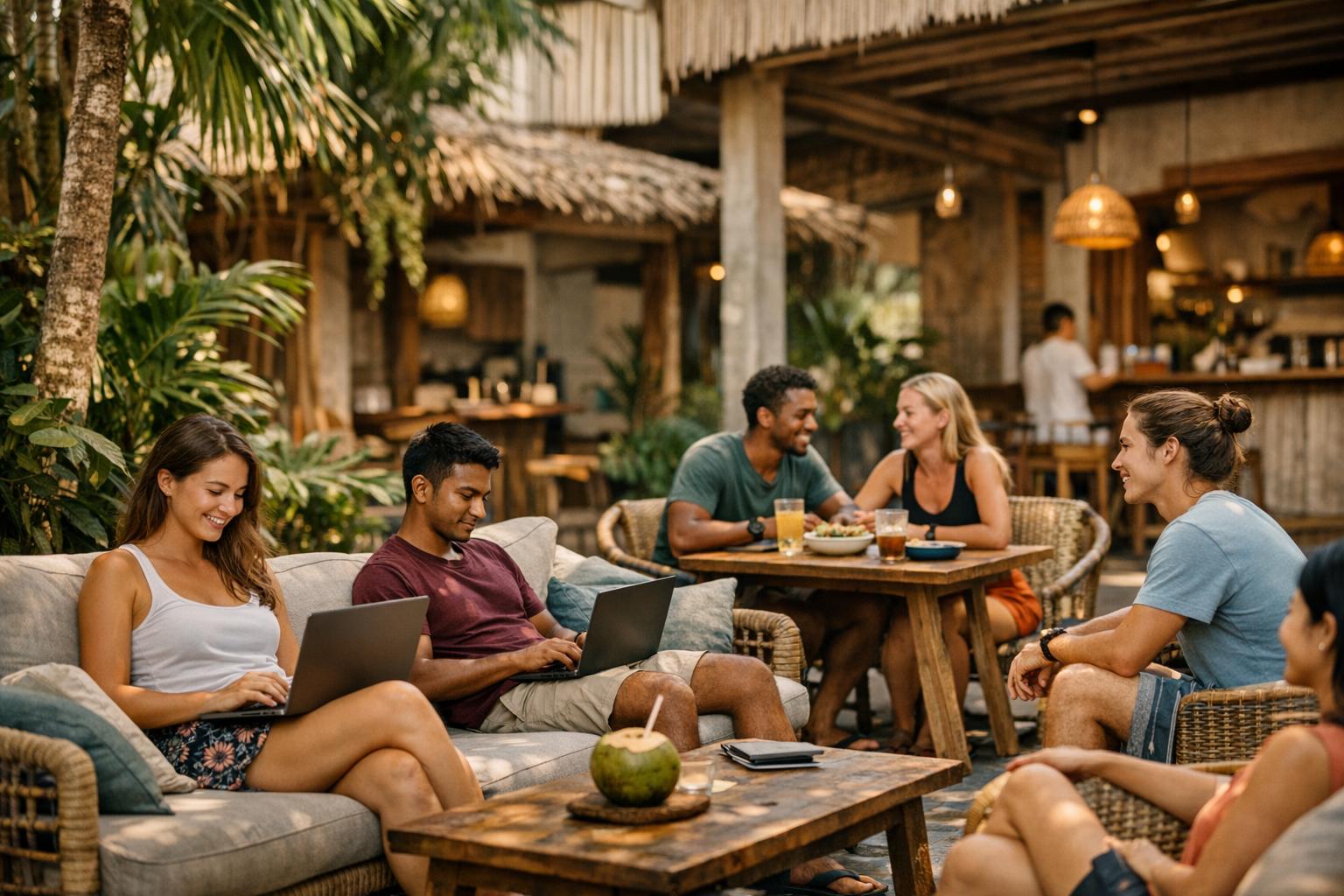
**Looking for affordable coliving destinations?** Here’s a breakdown of six countries combining low costs, reliable internet, and visa options for remote workers: Thailand, Vietnam, Indonesia, Mexico, Colombia, and Bulgaria. These places offer vibrant lifestyles, thriving communities, and monthly costs ranging from under $1,000 in Bulgaria to $2,000 in Mexico or Indonesia.
### Key Takeaways:
- **Thailand**: Affordable coliving ($140–$420), fast internet (up to 1 Gbps), and a 5-year Digital Nomad Visa.
- **Vietnam**: Low costs ($1,048/month), fast fiber internet, and a 90-day e-visa.
- **Indonesia**: Beachside options ($250–$1,600/month), decent internet (20–50 Mbps), and flexible long-term visas.
- **Mexico**: Higher rent in Mexico City ($800–$1,000/month) but affordable food and solid internet (60+ Mbps).
- **Colombia**: Budget-friendly ($1,200/month), fast internet (100+ Mbps), and a 2-year Nomad Visa.
- **Bulgaria**: Cheapest in Europe (<$1,000/month), blazing internet (up to 600 Mbps), and easy EU access.
### Quick Comparison:
| Country | Avg. Cost (USD) | Rent (Studio/1-BR) | Internet Speed | Visa Option |
| --- | --- | --- | --- | --- |
| Thailand | $1,107 | $331–$450 | Up to 1 Gbps | 5-year Digital Nomad Visa |
| Vietnam | $1,048 | $435 | 100 Mbps | 90-day e-visa |
| Indonesia | $1,500–$2,000 | $250–$1,300 | 20–50 Mbps | Remote Worker Visa |
| Mexico | $1,500–$2,000 | $800–$1,000 | 60+ Mbps | Temporary Resident |
| Colombia | $1,200–$1,800 | $360–$484 | 100+ Mbps | 2-year Nomad Visa |
| Bulgaria | <$1,000 | <$300 | Up to 600 Mbps | EU Residency/Tourist |
Each destination offers unique advantages. Thailand and Vietnam are ideal for Southeast Asia enthusiasts, while Colombia and Mexico cater to those seeking Latin American charm. Bulgaria stands out for budget-conscious travelers in Europe. Choose based on your priorities: cost, internet speed, or visa flexibility.
Budget Coliving Comparison: 6 Countries for Remote Workers
## 1. Thailand
Thailand is a top choice for budget-conscious travelers looking for long-term coliving options. It's not just affordable but also home to a thriving digital nomad community. Whether you prefer the serene mountain vibes of Pai or the coastal charm of Ko Lanta, there's something for everyone. Monthly costs range from about $600 in mountain towns to $900 for beachfront setups, offering a variety of options for different lifestyles. Here's a closer look at living expenses, food, transportation, and internet connectivity in Thailand.
### Average Coliving Rent (USD)
Coliving spaces in Thailand are a steal, with prices ranging from **$140 to $420**. These memberships often include utilities, high-speed internet, and shared workspaces, making them cost-effective compared to private rentals. For instance:
- Chiang Mai offers mid-range options from $412 to $938.
- Bangkok condos are priced between $420 and $980.
- Phuket’s premium rentals can go from $1,234 to $2,092.
- Ko Lanta’s BeachHub provides an all-inclusive package for about $900.
### Food and Transport Costs
Dining locally is the secret to saving big in Thailand. A hearty street food meal will typically cost **$1.10 to $2.80**, while eating at Western-style restaurants starts at around $5. Sticking to local eats could cut your food expenses by more than half. Monthly grocery costs for one person hover around $150.
Transportation is equally affordable. Public transport fares start at just $0.50, and renting a scooter costs between $70 and $140 per month. Just remember, you'll need a valid license and a helmet.
### Internet Speed (Mbps)
Thailand’s internet speeds are impressive, with a median download speed of **196.20 Mbps** and a 90% uptime. Major hubs like Chiang Mai and Bangkok offer blazing-fast fiber connections ranging from 200 to 1,000 Mbps. Even smaller towns like Pai deliver speeds of around 100 Mbps, while Ko Lanta can reach up to 1 Gbps in certain areas. Home internet plans cost between $14 and $42 monthly, and 5G SIM cards from providers like AIS, True, or DTAC are available for $10 to $20 per month, offering reliable backup connectivity.
### Visa Options
The **Destination Thailand Visa (DTV)**, launched in 2024, is a game-changer for remote workers. Priced at 10,000 THB (around $275), this visa is valid for five years and allows 180-day stays, extendable by another 180 days. To qualify, applicants must be at least 20 years old, have savings of 500,000 THB (approximately $15,000), and work remotely for a company outside Thailand. DTV holders enjoy tax exemptions on foreign-earned income.
For shorter trips, tourist visas offer a 30-day entry (free for citizens of certain countries) and can be extended by another 30 days for 1,900 THB (roughly $53).
## 2. Vietnam
Vietnam is an appealing destination for remote workers, offering living costs that are 59% lower than in the United States. It's ranked as the 6th most affordable country in Asia, making it a magnet for those seeking a combination of affordability and quality of life. Cities like Ho Chi Minh City, Da Nang, and Hoi An are particularly popular, blending bustling city life with serene coastal vibes. The country’s thriving café culture, fueled by its status as the world's second-largest coffee exporter, makes it an ideal spot for remote work. Let’s break down the typical expenses for rent, food, and transportation.
### Average Coliving Rent (USD)
Coliving spaces in Vietnam cater to a range of budgets, with monthly costs falling between **$150 and $1,000+**, depending on the setup. For those on a tight budget, dorm-style accommodations are available for **$150 to $250**. Private studios generally range from **$300 to $600**, while high-end spaces with premium amenities can cost **$700 to $1,000 or more**.
For example, in December 2025, [Glasshouse Coliving](https://coliving.com/spaces/3wdyi4jg) in Hoi An offered rooms starting at **$320/month**, complete with a pool and coworking spaces. In Ho Chi Minh City, modern townhouses listed studios for around **$650/month**, while eco-friendly options in Da Nang began at approximately **$780/month**.
### Food and Transport Costs
Food in Vietnam is a major budget-saver. Local street food, including dishes like *phở* and *banh mi*, costs just **$1.50 to $3.00** per meal. If you eat out daily, your monthly food expenses will likely range from **$150 to $200**, but cooking at home can reduce this to about **$100**. Western-style restaurants are pricier, with meals costing **$8 to $11**, so sticking to local cuisine is a smart way to save.
Transportation is equally affordable. Renting a motorbike costs **$40 to $100** per month, and ride-hailing apps such as Grab charge **$1 to $3** for most city trips. Public bus passes are another economical option, costing just **$8 to $15** monthly. Many landlords offer discounts of 10% to 20% for long-term stays, so it’s worth negotiating.
### Internet Speed (Mbps)
Vietnam’s major cities, like Ho Chi Minh City and Hanoi, offer fast and reliable internet with fiber connections reaching speeds of up to **100 Mbps**. Smaller towns typically provide speeds of 10–20 Mbps, which are still sufficient for most remote work needs. Broadband plans cost around **$9.40 per month**, and mobile data is incredibly cheap, with 60GB+ plans priced between **$5 and $10**. Viettel SIM cards are recommended for their excellent rural coverage, although power outages during the rainy season can occasionally disrupt service, so having a 4G backup is a smart move.
### Visa Options
While Vietnam doesn’t yet have a dedicated digital nomad visa, the **90-day e-visa** (multiple entry) is the go-to option for remote workers. For longer stays, visa runs to nearby countries are common - round-trip flights from Ho Chi Minh City to Bangkok, for instance, cost about **$100**. If you plan to stay beyond 180 days, you can apply for a temporary resident visa, provided you meet the income requirement of **$2,000 monthly** from foreign sources.
## 3. Indonesia
Indonesia is a standout destination in Southeast Asia for those seeking affordable coliving opportunities. With living costs **62.2% lower** than in the United States, this archipelago offers options for every budget, from bustling Jakarta to serene Bali. For remote workers in search of affordability and a high quality of life, Indonesia is hard to beat. A single person’s estimated monthly expenses, excluding rent, are just **$434.50**, making it an excellent choice for longer stays. Let’s dive into the details of rent, food, internet, and visa options in Indonesia.
### Average Coliving Rent (USD)
Coliving spaces in Indonesia cater to a range of budgets. Monthly rates start as low as **$157** and can exceed **$1,600** for high-end options. Private rooms in city centers typically cost between **$276 and $326**, while accommodations outside the city center range from **$157 to $184**. Dorm-style living averages around **$270 per month**. If you’re eyeing luxury coliving spots in Bali, particularly those with jungle views or premium amenities, expect to pay anywhere from **$530 to over $1,600** monthly.
### Food and Transport Costs
Food in Indonesia is famously affordable. Local "warung" eateries serve popular dishes like Nasi Goreng for just **$1.79 to $3.00** per meal. For a more upscale dining experience, a three-course meal for two at a mid-range restaurant costs around **$14.95**, and a cappuccino is a mere **$1.69**. Transportation is equally budget-friendly. Renting a scooter for a month costs about **$50**, while daily rentals can quickly add up. Public transport passes are priced between **$9.00 and $11.96** monthly, and ride-hailing services charge minimal fares, with taxi meters starting at **$0.54 to $0.60**. Gasoline is also affordable at **$0.78 per liter**, making scooters a practical option for getting around.
### Internet Speed (Mbps)
For remote workers, reliable internet is a must, and Indonesia’s major cities deliver. Jakarta and Bali offer broadband speeds of **60 Mbps or higher**, with monthly costs around **$22.07**. Mobile data is a bargain too, with **10GB+ plans** priced between **$4.20 and $4.63**. However, if you’re planning to explore remote islands, be prepared for occasional outages. A backup mobile data plan is a smart move to stay connected.
### Visa Options
Indonesia provides a variety of visa options for those planning long-term stays. The **KITAS (Temporary Stay Permit Card)** is the go-to choice for stays between six months and two years, with categories for work, study, and retirement. For retirees over 55, the retirement KITAS is renewable for up to five years. If you’re ready to make a significant financial commitment, the **Second Home Visa** requires an investment of approximately **$130,000** (2 billion IDR) in a local bank or real estate, granting stays of 5 to 10 years. After holding a KITAS for three consecutive years, you can apply for the **KITAP (Permanent Stay Permit)**. Most foreigners start with a **VITAS (entry visa)**, which must be converted to an ITAS within 30 days of arrival. These flexible visa options make Indonesia a top pick for digital nomads and long-term travelers alike.
## 4. Mexico
Mexico has quickly become a top pick for budget-conscious coliving enthusiasts, with Mexico City at the center of it all. The cost of living here is impressively low - one person can live comfortably on just $664 a month. As one of the largest cities in the world, with over 20 million residents, Mexico City boasts one of Latin America’s biggest and most affordable metro systems, making transportation both easy and cheap. The coliving options are as diverse as the city itself, ranging from restored 18th-century buildings in historic areas to sleek, eco-friendly modern homes. For those seeking an affordable yet vibrant Latin American experience, Mexico is a compelling alternative to Southeast Asia.
### Average Coliving Rent (USD)
Coliving prices depend on the city, but there’s something for every budget. In Guadalajara, you can find options starting at just $162 per month. Mérida offers spaces around $274 per month, while Puebla listings begin at approximately $307. Mexico City, being the hub of activity, has coliving spaces starting at about $442 per month. For a more creative vibe, Oaxaca’s coliving options start at roughly $640 per month. Many of these spaces come fully equipped, with utilities, high-speed Wi-Fi, cleaning services, and furnished rooms included in the price.
### Food and Transport Costs
Everyday expenses in Mexico are refreshingly low. Street food, like the delicious tlacoyos, costs about $2 and can serve as a full meal. A liter of milk is priced at $1.47, and a dozen eggs will set you back around $2.37. For the best deals on fresh produce, local markets are the way to go. Dining out is also affordable - a meal for two at a mid-range restaurant ranges from $31 to $104. Transportation won’t break the bank either: a one-way metro ticket costs just $0.30, while shared minivans, or "colectivos", charge about $3 per trip. Gasoline is priced at $1.21 per liter, making road trips or rental car excursions a practical option.
### Internet Speed (Mbps)
When it comes to internet connectivity, Mexico City leads the pack, offering reliable and fast service. The average fixed broadband speed is around 67.04 Mbps for downloads and 40.15 Mbps for uploads, with latency averaging 36.87 ms. High-end coliving spaces like U‑Co Roma boast speeds as high as 249.73 Mbps for downloads and 92.61 Mbps for uploads. Outside the capital, digital nomads will also find dependable internet in places like Playa del Carmen and Puerto Vallarta.
### Visa Options
Mexico makes it easy for international visitors to stay. Citizens from 65 countries can enter visa-free for short-term visits, and for those planning longer stays, temporary or permanent residency options are available. These residency permits also grant access to Mexico’s national healthcare system (IMSS). With its straightforward visa policies, affordable living costs, and solid infrastructure, Mexico is an excellent choice for those looking to settle into a longer-term coliving arrangement. Up next, we’ll explore more destinations to compare coliving opportunities.
## 5. Colombia
Colombia has quickly become a favorite for budget-savvy coliving enthusiasts, with cities like Medellín and Bogotá standing out. Living costs for a single person, excluding rent, average just **$548.40 per month** - a whopping **53.6% less** than in the United States. Medellín, often dubbed "the new Berlin" by digital nomads, is a modern, walkable city with excellent remote-work facilities. Coliving spaces in Colombia are designed for convenience, offering all-inclusive pricing that covers utilities, high-speed Wi-Fi, cleaning, and even community events, making it easier to stick to a budget. Let’s dive into rental costs in Colombia.
### Average Coliving Rent (USD)
Coliving rents in Colombia are impressively affordable. In Medellín, you can find options starting at just **$146 per month**, while Bogotá offers spaces beginning around **$213 monthly**. These options usually include furnished rooms, utilities, and fast internet. If you're looking for something more luxurious in neighborhoods like El Poblado, expect prices to go up to **$1,100 per month**. Based on 2,525 reviews, these coliving spaces have an average rating of **4.9 out of 5**, offering great value without compromising on quality.
### Food and Transport Costs
Everyday expenses in Colombia are easy on the wallet. A simple breakfast with eggs, juice, and arepas costs just **$2.55 to $3.20**, while lunch runs between **$3 and $7**. Dinner at a restaurant can range from **$5 to $12**, often making cooking unnecessary. If you prefer groceries, shopping at local markets costs about **$85 per month** for one person. Transportation is equally economical - a single metro or bus ride costs **$0.70 to $1**, and a monthly public transport pass in Medellín is around **$42.50**. Even taxi rides within the city are affordable, averaging **$3 per trip**.
### Internet Speed (Mbps)
Cities like Medellín and Bogotá provide dependable high-speed internet, perfect for remote work. Coliving and coworking spaces typically offer speeds of **100 to 200 Mbps**, while home broadband costs about **$26 per month**. This strong infrastructure ensures smooth video calls, quick downloads, and efficient file sharing, rivaling what you'd find in many developed nations.
### Visa Options
Colombia's visa policies add to its appeal for remote workers. The **Type V Digital Nomad Visa** allows stays of up to **two years**, requiring a minimum monthly income of about **$900** (three times the Colombian minimum wage). The application is done entirely online through the Ministry of Foreign Affairs portal, with total costs ranging from **$300 to $400**, covering the application fee, issuance fee, and foreigner ID registration. Once in Colombia, you’ll need to register with Migración Colombia and obtain your Cedula within **15 days** of arrival. For shorter stays, a tourist visa allows up to **180 days per year**, though it doesn’t grant legal residency status.
## 6. Bulgaria
Bulgaria stands out as a budget-friendly destination with one of the lowest tax rates in the EU, making it a favorite for remote workers and coliving enthusiasts. Since joining the Schengen area on January 1, 2025, the country has become even more accessible for travelers. Living costs for a single person, excluding rent, average about $701.80 per month - roughly 39.5% less than in the United States. Cities like Sofia, Bansko, and Plovdiv are particularly attractive for digital nomads, offering affordable living, fast internet, and thriving remote work communities.
### Average Coliving Rent (USD)
Rent in Bulgaria is impressively affordable. In Bansko, a well-known mountain town and digital nomad hotspot, coliving spaces start at around $480 per month. Sofia, the capital, offers a range of options from $550 to over $1,000 monthly, depending on location and amenities. Coastal cities like Varna and Burgas often provide even better deals, with lower rents and utility costs compared to Sofia. Most coliving arrangements include furnished rooms, utilities, and high-speed Wi-Fi, making them ideal for remote workers.
### Food and Transport Costs
Daily expenses in Bulgaria are easy on the wallet. A meal at a budget-friendly restaurant costs between $8.50 and $11.30, while a mid-range three-course dinner for two is priced at $37 to $48. Monthly grocery bills for one person typically range from $200 to $300, especially if you shop at local markets for fresh, seasonal produce. Public transportation is another bargain - a single bus or metro ticket costs just $0.57 to $1.13, and a monthly pass in cities like Sofia or Plovdiv is only $25 to $28. Even taxis are economical, with fares starting at about $1.10 to $1.40. These low costs make Bulgaria an appealing choice for long-term remote work.
### Internet Speed (Mbps)
Bulgaria offers some of the fastest internet speeds in the world - a major perk for remote workers. Coliving spaces often provide speeds up to 600 Mbps, while standard home broadband (60 Mbps or higher) costs just $13.50 per month. This reliable connectivity ensures smooth video calls, quick file uploads, and overall hassle-free online work.
### Visa Options
For non-EU citizens planning to stay longer than 90 days, a D-type visa is required. Additionally, Bulgaria is set to adopt the Euro on January 1, 2026, simplifying financial transactions for international residents. With a flat 10% personal and corporate income tax rate, the country continues to attract freelancers and remote workers looking for an affordable and convenient place to live and work.
## Pros and Cons
Each country presents its own mix of perks and challenges for budget-conscious colivers. Here's a quick rundown of the highlights and trade-offs for each destination, based on the insights shared earlier.
**Vietnam** is the most affordable option, with monthly expenses averaging about $1,048. However, its visa policy limits stays to 90 days, which might not suit long-term travelers. On the other hand, **Thailand** offers a 5-year Digital Nomad Visa (DTV) and inexpensive street food, but urban areas like Chiang Mai come with heavy scooter traffic and seasonal air quality concerns.
**Indonesia** is a favorite for its beachside communities and wellness hubs like Canggu, where coliving spaces start at just $250 a month. That said, internet speeds lag behind at 20–50 Mbps. **Colombia**, by contrast, boasts faster internet at 100+ Mbps and a 2-year nomad visa, but safety in certain urban neighborhoods and the local *estrato* utility system require extra attention.
**Mexico** is a convenient choice for North Americans, offering minimal time-zone differences and a culinary scene that’s second to none. It scores an impressive 4.8/5 across 17 coliving properties listed on [Coliving.com](https://coliving.com/). However, rental costs in Mexico City are higher, ranging from $800 to $1,000 per month. Meanwhile, **Bulgaria** is the most affordable European option, with rents starting at $480 in Bansko and fast internet speeds. The downside? A four-season climate that includes chilly winters, making it less appealing for those seeking a tropical escape.
Experts back up some of these observations:
> "Compared to cities in the U.S., Australia, Canada, and many parts of Europe, you can expect to find more affordable living in Colombia and see low monthly expenses." - Nancy Kiernan, International Living
Colombia, in particular, stands out for its cost-effectiveness. **Medellín**, with a 4.9/5 rating across 19 coliving properties, has become a favorite among remote workers who value affordability and dependable internet.
## Our conclusion
The comparisons outlined above provide a clear understanding of how each destination aligns with your needs. Whether you're prioritizing affordability or lifestyle, the choice is yours. For instance, Colombia offers a compelling option, with rent costs averaging **73.4% lower than in the United States**. As Priscila Marotti aptly puts it, *"Colombia is one of the cheapest high-quality living destinations."*
## FAQs
### What visa options are available for digital nomads in budget-friendly coliving destinations?
Many budget-friendly coliving spots now offer **digital nomad visas**, making it easier for remote workers to settle down for longer periods. Places like Greece, Malta, Croatia, Costa Rica, and Indonesia (Bali) provide visas that typically last up to a year and are often renewable. These visas usually come with straightforward requirements like a modest income threshold, health insurance coverage, and a clean background check. Thailand even takes it a step further with a 5-year Digital Nomad Visa, making it a standout choice for those seeking an extended stay.
In Latin America, Colombia’s digital nomad visa is especially accessible, requiring proof of an average monthly income of at least **$684 USD** over the past three months, along with health insurance and a small application fee. Portugal offers two distinct options: the D8 visa, designed for higher-earning remote workers, and the D7 visa, which caters to freelancers or retirees with a steady income. Both visas come with the added perk of potentially leading to permanent residency.
Some of the most popular coliving hubs - like Chiang Mai in Thailand, Medellín in Colombia, Tbilisi in Georgia, Lisbon in Portugal, and Mexico City in Mexico - offer visa programs tailored to digital nomads. Always check the official immigration websites of these countries to get the latest details on requirements and application processes before making your plans.
### What are the internet speeds like in these affordable coliving destinations?
When it comes to internet speeds in budget-friendly coliving hotspots, most destinations offer reliable connections suitable for remote work. **Chiang Mai, Thailand**, is a standout, boasting fiber-optic internet that often exceeds 100 Mbps - perfect for those who need high-speed access for tasks like large file transfers or streaming.
In contrast, **Canggu, Bali**, typically provides speeds ranging from 20 to 50 Mbps. While not as fast, this is still sufficient for video calls, browsing, and other everyday online activities, though it might feel sluggish for heavy uploads.
Other popular cities like **Medellín (Colombia)**, **Tbilisi (Georgia)**, **Budapest (Hungary)**, **Ho Chi Minh City (Vietnam)**, **Lisbon (Portugal)**, **Mexico City (Mexico)**, **Belgrade (Serbia)**, and **Cape Town (South Africa)** generally offer internet speeds in the **20 to 50 Mbps range**. These speeds are enough to handle most remote work tools without major issues. Although the connection quality varies by location, all these destinations are equipped to support a smooth and productive coliving experience.
### What is the most budget-friendly country for long-term coliving?
Looking for affordable long-term coliving options? **Bosnia and Herzegovina**, especially cities like Sarajevo, is worth considering. With monthly coliving costs starting at just **$400**, it’s a great pick for those keeping an eye on their budget.
Beyond the low costs, this country offers a blend of rich history, a laid-back way of life, and stunning natural scenery. It’s a fantastic spot for digital nomads or remote workers who want to save money while still enjoying a comfortable and enriching experience.
## Related Blog Posts
- [Remote Work Housing FAQ: Your Top 20 Questions Answered](/blog/remote-work-housing-faq-your-top-20-questions-answered)
- [Best Cities for Remote Work: Asia vs. Europe](/blog/best-cities-for-remote-work-asia-vs-europe)
- [Top Coliving Cities for Remote Workers in 2025](/blog/top-coliving-cities-for-remote-workers-in-2025)
- [Coliving in Bali: What to Expect and How to Prepare](/blog/coliving-in-bali-what-to-expect-and-how-to-prepare)