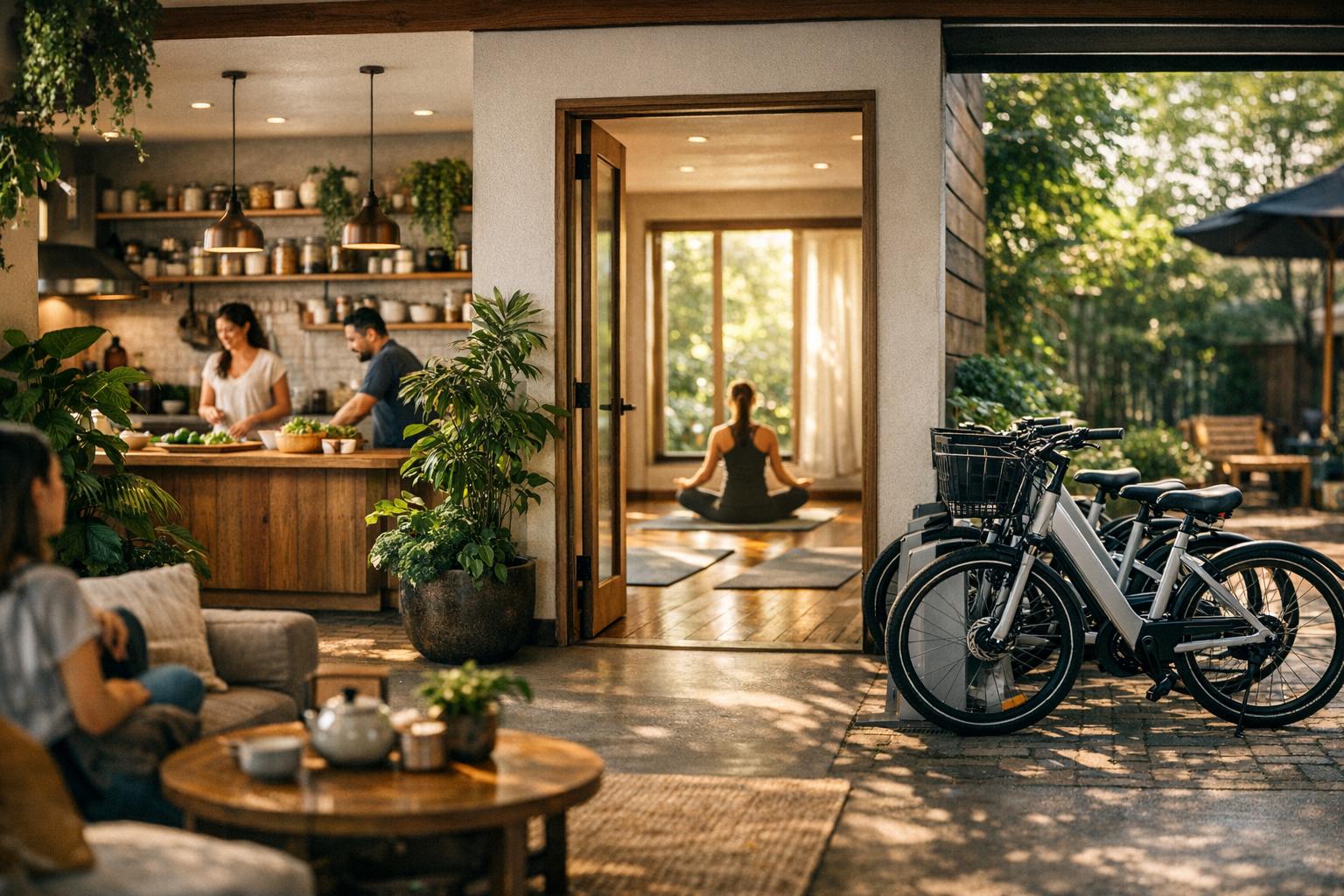
**[Wellness coliving spaces](https://coliving.com/for/healthcare-professionals) are reshaping how people live and connect.** These shared spaces blend housing with amenities designed to improve health, reduce loneliness, and build community. From plant-based kitchens to [yoga rooms](https://coliving.com/for/yogis) and bike-sharing programs, these homes cater to [remote workers](https://coliving.com/for/remote-workers), [digital nomads](https://coliving.com/for/digital-nomads), and [young professionals](https://coliving.com/for/young-professionals) seeking meaningful connections and healthier lifestyles.
Key highlights:
- **Plant-Based Kitchens**: [Shared vegan kitchens](https://coliving.com/for/vegans) reduce conflict, promote sustainability, and encourage healthier eating habits.
- **Yoga Rooms**: Spaces for meditation, group classes, and fitness activities help improve mental and physical well-being.
- **Bike Sharing**: Affordable, eco-friendly transportation options reduce costs and environmental impact.
- **All-Inclusive Pricing**: Covers utilities, WiFi, housekeeping, and wellness amenities, simplifying budgeting.
These spaces address growing concerns about loneliness and work-life balance while promoting healthier habits and greener living. Popular examples include Haven Coliving in California and [La Estropajera](https://coliving.com/spaces/foxyd3yw) in Mexico, each offering unique setups tailored to wellness-focused lifestyles.
## Plant-Based Kitchens in Coliving Spaces
In [wellness-focused coliving spaces](https://coliving.com/blog/8-essential-amenities-to-look-for-in-remote-coliving-spaces), the kitchen has evolved into the **social hub**, where plant-based cooking brings people together, fostering connection and shared values. These aren’t your average shared kitchens - they’re intentionally crafted to encourage healthy living, reduce waste, and create a sense of community around food.
### Why Plant-Based Kitchens Work
Plant-based kitchens tackle common issues in shared housing, like dietary clashes and cross-contamination. For vegan residents, these spaces eliminate the stress of navigating mixed-diet kitchens. With shared vegan essentials like grains, oils, and spices readily available, residents can maintain healthier eating habits without the hassle of buying in bulk.
These kitchens also have a measurable impact on sustainability. On average, they reduce an individual’s environmental footprint by 23%. By cutting down on packaging waste, promoting composting, and including features like indoor herb gardens, these spaces help lower CO2 emissions. For instance, at LILAC Cohousing in the UK, shared resources and sustainable practices result in CO2 emissions that are just 37% of the national average. Residents also report significant health improvements, with 60% experiencing better overall wellbeing within three months.
The amenities in these kitchens go beyond the basics. High-powered blenders and juicers make it easier to prepare nutrient-packed meals, while indoor herb gardens not only supply fresh ingredients but also improve air quality and reduce stress. Many [coliving spaces](https://coliving.com/nearby) even host vegan cooking classes and nutrition workshops, equipping residents with skills for healthier, long-term habits.
> "The desire to share lives with each other often meant sharing practices, and in communities where pro-environmentalism was the norm, this could mean that residents... 'leveled each other up' when it came to pro-environmental practice." – Dr. Penny Clark, Head of Research & Sustainability, Conscious Coliving
The social aspect is just as impactful. Plant-based meals act as a unifying option that accommodates a variety of dietary needs, making it easier for residents from different backgrounds to share meals. Clear kitchen guidelines and shared responsibilities further minimize conflicts in communal living - reducing disputes by up to 75% and boosting friendships by 65%.
### Examples of Plant-Based Kitchens in Action
Several coliving spaces around the world have embraced plant-based kitchens as a cornerstone of their communities:
- **La Estropajera (Sayulita, Mexico):** This wellness-oriented coliving space offers plant-based kitchen facilities alongside amenities like a gym, swimming pool, and access to nature, starting at $498 per month.
- **[Lorca](https://coliving.com/lorca) (Spain):** A budget-friendly vegan retreat experience starting at $196 per month, making plant-based coliving accessible to a wide range of residents.
- **[The Annex](https://coliving.com/spaces/hv2kdcda) (Toronto):** Located near Toronto’s vibrant plant-based food scene, this coliving space offers vegan-friendly kitchens and modern facilities starting at $559 per month.
These kitchens are designed with both functionality and community in mind. They include features like energy-efficient appliances, induction cooktops, and antimicrobial surfaces for easy cleaning. With at least 52 inches of space between counters and cabinets, multiple residents can comfortably cook together.
> "Our [communal cooking spaces](https://coliving.com/for/chefs-cooks) are where this magic happens... It's where we prepare meals and build friendships." – Livhola Singapore
These thoughtfully designed kitchens are just one part of the larger wellness-focused amenities offered in coliving spaces, which often include yoga studios, bike-sharing programs, and more.
## Yoga Rooms and Fitness Amenities
Wellness-focused coliving spaces often include yoga studios and fitness facilities designed to support both physical health and mental well-being. These spaces go beyond exercise - they create opportunities for personal growth and community bonding by blending individual routines with group activities.
### Mindfulness and Community Through Yoga
Yoga rooms in coliving spaces are more than just places to stretch and meditate. They host a variety of activities, from solo practice to group sessions like sound baths, meditation circles, and wellness workshops. For example, at Haven Coliving in Venice, CA, residents have access to yoga, meditation, and community events that integrate wellness into daily life. De'Andre Sinette, a resident and yoga teacher at Haven, highlights how these offerings encourage rapid personal growth among participants.
The sense of community these spaces foster is powerful. Research shows that people living in wellness-oriented communities feel **45% stronger social connections** compared to those in traditional neighborhoods. Shared yoga classes and meditation sessions help combat isolation by creating regular opportunities for residents to connect through shared activities. As Haven's CEO Ben Katz puts it:
> "At the end of the day, modern life is tough for building community and connection. We decided to create an environment where people who are passionate about mindfulness, fitness, and wellness can spend a lot of time together."
### Additional Wellness Features in Coliving Spaces
Wellness-focused coliving spaces don’t stop at yoga. Their fitness amenities often go above and beyond, incorporating features like biophilic design - natural elements that can lower stress hormone levels by 47% - and circadian lighting systems that promote better sleep and mood.
The impact on health is striking. Residents in these environments report a **32% reduction in chronic disease markers** and a 41% boost in life satisfaction. Fitness areas are designed to be versatile, offering everything from strength training to group classes, catering to the 70% of renters who prefer properties with robust fitness facilities. Many communities also embrace resident-led initiatives, where members organize yoga and meditation sessions, further strengthening the collective sense of purpose and belonging.
## Bike Sharing and Transportation Options
### Why Bike Sharing Matters in Coliving
Bike-sharing programs are changing the way people move around cities while helping to reduce environmental impact. Take New York City's Citi Bike system, for instance. Between January 2014 and December 2017, it saved the equivalent of 13,370 tons of oil and slashed CO2 emissions by 30,070 tons. These programs are especially useful as "first and last-mile" solutions, filling gaps in public transit and cutting down reliance on personal cars.
Another big draw of bike-sharing is the cost savings. Without the need to buy, maintain, or insure a car, people can significantly lower their transportation expenses. Ralph Buehler, Chair of Urban Affairs and Planning at Virginia Tech Research Center, puts it simply:
> "For a community, bike share can help reduce driving and CO2 emissions."
Modern bike-share programs have stepped up their game with pedal-assisted e-bikes. These bikes, powered by batteries lasting up to 60 miles per charge, make longer rides and uphill routes much easier.
The popularity of biking is on the rise across the U.S., with bicycle ridership up 40% over the past decade. Reflecting this trend, 71.6% of property managers now see secure bike storage as a must-have amenity. Many coliving spaces with a focus on wellness go beyond basic bike racks, offering indoor storage rooms equipped with repair stations, air pumps, and vertical racks. These setups not only protect bikes from the weather but also make the most of tight urban spaces.
The impact of these programs is clear, especially in [wellness-focused coliving communities](https://coliving.com/communities) that have embraced bike-sharing as a core feature.
### Coliving Spaces With Bike Sharing Programs
Several coliving communities have made bike-sharing a central part of their amenities. A standout example is California Place in Redding, California. In May 2023, this $111 million mixed-use residential project - developed by K2 Development Companies, the City of Redding, and The McConnell Foundation - introduced the Redding Bike Share system. This program rolled out 70 electric bikes across 25 locations, including the Shasta Bike Depot, making it easy for residents to access sustainable transport options.
Tripalink also prioritizes bike-sharing in walkable cities like Seattle. Programs such as Bike Share Seattle give residents eco-friendly alternatives to get around. Similarly, AvalonBay Communities caters to the growing demand for green transportation by offering bike storage and electric vehicle charging stations across its properties. Many of these programs include app-based systems and digital locks, making it simple for residents to reserve and use bikes whenever they need them.
## Case Studies of Wellness-Focused Coliving Spaces
Wellness Coliving Spaces: Amenities and Features Comparison
Looking beyond individual wellness features, real-life examples highlight how combining these elements can significantly enhance residents' well-being. Many coliving spaces incorporate features like plant-based kitchens, yoga studios, and eco-friendly transportation options to create healthier, more connected communities.
**Haven Coliving**, located in Venice Beach, California, launched in July 2020 with 96 residents living in Japanese-style sleep pods. Rent is $995 per month, and residents are required to contribute two hours of community service each month, often by teaching yoga or hosting plant-based cooking classes. The space includes a chef’s kitchen that hosts biweekly vegan dinners, a yoga room, and an outdoor deck used for meditation and sound baths. Haven fosters a sense of community for individuals passionate about mindfulness, fitness, and wellness through these shared activities.
The **[Balanced and Sustainable Coliving Oasis](https://coliving.com/spaces/uyhqbog9)** in Castelldefels, Barcelona, offers a well-rounded wellness experience. With a 5.0/5 rating from 4 reviews on Coliving.com, the property includes two fully equipped kitchens, rooftop yoga sessions, a private gym, and crossfit facilities. [Security deposits](https://coliving.com/features/security-deposit-replacement) start at €600 for shared bathrooms and €750 for private ones. The property also supports eco-conscious living with e-bike rentals, bicycle parking, carsharing access, solar panels, and water-saving systems that align with residents’ values.
In Sayulita, Mexico, **La Estropajera** has received a perfect 5.0/5 rating from 181 reviews on Coliving.com, with rates starting at approximately NOK 10,264 per month. This space is tailored for nature enthusiasts and vegans, featuring a dedicated plant-based kitchen, a gym, and a fitness studio. Its location near nature trails strengthens the connection between wellness and the natural environment.
### Comparing Wellness Amenities Across Spaces
| Space Name | Location | Kitchen Features | Yoga & Fitness Amenities | Mobility Options |
| --- | --- | --- | --- | --- |
| **Balanced and Sustainable Coliving Oasis** | Castelldefels, Barcelona | Two kitchens, community meals, cooking classes, food waste composting | Private gym, rooftop yoga, meditation classes, crossfit | E-bike rentals, bicycle parking, carsharing access |
| **Haven Coliving** | Venice Beach, California | Chef’s kitchen with biweekly vegan dinners, community garden | Yoga room, yoga deck, gym, outdoor meditation space | Beach proximity, group jogs, beach outings |
| **La Estropajera** | Sayulita, Mexico | Plant-based kitchen for vegans and nature lovers | Gym, fitness studio | Near nature trails, eco-friendly focus |
| **La Granja** | San Pedro, Costa Rica | Shared vegan-friendly kitchen, communal dining | Gym, fitness studio | Close to Parada Calle Real bus station for transit |
The Balanced and Sustainable Coliving Oasis appeals to digital nomads and entrepreneurs who enjoy "slow rituals" like sunset journaling or community picnics. In contrast, **La Granja** in San Pedro, Costa Rica, maintains a 5.0/5 rating from 13 reviews on Coliving.com, with rates starting at approximately NOK 5,090 per month. This space emphasizes communal dining and convenient public transit access.
These examples underline how wellness-focused amenities can shape meaningful living experiences, paving the way for a closer look at how these spaces integrate community and lifestyle.
## Community and Lifestyle Integration
Wellness-focused coliving spaces are redefining how we live by turning shared amenities into hubs for connection and shared experiences. Imagine a plant-based kitchen doubling as a space for group cooking sessions led by guest chefs or a yoga room hosting morning classes that bring neighbors together. These thoughtful design elements aim to combat loneliness - a growing issue with serious health implications.
Take Haven Coliving in Venice Beach, California, for example. CEO Ben Katz built a model centered on fostering genuine connections among residents. At Haven, regular resident-led activities - like yoga classes or plant-based cooking sessions - transform otherwise passive amenities into vibrant community experiences. The idea is simple but powerful: when residents share their skills and interests, they create bonds that go far beyond the surface. For instance, during the isolating early days of March 2020, Haven organized group jogs and sound baths, helping residents connect during a challenging time.
Sustainability also plays a key role in these spaces, seamlessly blending into everyday life. Shared kitchens and appliances not only cut down on individual carbon footprints but also encourage communal cooking and dining. Events like monthly fireside chats add another layer, offering a mix of intellectual engagement and social interaction. As Jaimee Williams from SPACE10 aptly puts it:
> "Co-living is an opportunity to live in your own private place but still be part of a family."
## Finding Your Wellness Coliving Space on [Coliving.com](https://coliving.com/)

If you're looking for a coliving space that prioritizes wellness and eco-conscious living, Coliving.com makes the search simple. Start with the **"Find my home"** search bar - just type in your desired city or region. From there, use filters to narrow down your options based on amenities like "Gym/fitness studio", "Bikes", or "Kitchen", helping you find spaces that align with your health and sustainability goals. Check the **Property Info** section for details on eco-friendly features like food waste composting, energy-efficient appliances, and efforts to minimize plastic use.
Dive deeper by reading resident reviews to ensure the space supports your wellness aspirations. The **Community Events** filter is another great tool - look for spaces offering activities like "Fitness classes", "Cooking classes", or "Community meals" to find places where wellness is part of everyday life. Missing details? Reach out to the host directly for clarification.
Resident reviews are an invaluable resource, offering firsthand insights into the quality of wellness amenities and community life. With over **14,000 reviews** on Coliving.com, you can rely on feedback from people who've actually lived in these spaces. For instance, a modern coliving home in Brooklyn boasts an impressive **5.0 out of 5 stars from 109 reviews**, with residents applauding its gym, coworking space, and rooftop terrace. Reviews often shed light on how well wellness features are maintained and whether advertised community events truly take place.
Once you've found the perfect spot, select your dates, choose your room type, and use the **"Book now - Pay later"** feature to reserve your space without upfront payment. Coliving.com ensures your rent payment is secure, transferring it to the host 24 hours after you move in. Plus, they offer a [money-back guarantee](https://coliving.com/help/residents/guarantee/money-back-guarantee) for any issues reported within the first 24 hours.
Pricing depends on location, with wellness-focused spaces like Haven in Venice Beach starting at $995 per month. Discounts are available for longer stays. Security deposits, usually ranging between **$600 and $750**, are paid directly to the host before move-in. The [cancellation policy](https://coliving.com/help/residents/guarantee/easy-cancellation) allows free cancellations up to 14 days before your scheduled arrival.
## Conclusion
Wellness coliving spaces are redefining how we integrate health into our daily lives. Imagine **plant-based kitchens** where residents come together over wholesome meals, fostering a sense of community while making eco-friendly choices. Add **yoga and meditation rooms**, offering peaceful corners to unwind and recharge - studies show these practices can help lower stress and combat burnout. And let’s not forget **bike-sharing programs**, which seamlessly combine fitness with sustainable commuting.
These features tackle what experts call the "metacrisis of disconnection" - a modern struggle marked by feeling detached from oneself, others, and the natural world. Research even suggests that loneliness carries a health risk on par with smoking 15 cigarettes a day. Wellness coliving spaces aim to bridge these gaps: **meditation areas** nurture self-connection, **communal kitchens** encourage bonding with others, and **sustainable designs** and transport options reconnect us to nature.
It’s not just about personal well-being - this movement is driving a booming industry. The wellness real estate market is expected to hit **$1.1 trillion by 2029**, growing at an impressive rate of over 15% annually. Millennials and Gen Z are leading this shift, prioritizing wellness-focused lifestyles over traditional markers of success like owning a car.
Ready to find your perfect wellness space? Visit Coliving.com, where you can filter options by amenities like "Gym/fitness studio", "Bikes", or "Kitchen" to match your health goals. With properties in 380 cities across more than 70 countries, embracing wellness has never been easier.
## FAQs
### How do plant-based kitchens in coliving spaces support sustainability and wellness?
Plant-based kitchens in coliving spaces take a big step toward reducing the environmental footprint of food production. By swapping out animal-based foods for plant-based options, these kitchens can dramatically cut greenhouse gas emissions, use less land and water, and generate less food waste. The impact? A win for the planet, healthier eating habits for residents, and a stronger sense of community built around shared, eco-friendly meals.
Focusing on plant-based ingredients allows residents to live in harmony with their values, promoting personal well-being while contributing to a greener, more sustainable way of life.
### What are the benefits of having yoga rooms in coliving spaces designed for wellness?
Yoga rooms in coliving spaces focused on wellness provide an easy way for residents to care for both their physical and mental health. With on-site yoga and meditation sessions, residents can seamlessly add movement and mindfulness to their daily routines. This setup not only helps reduce stress and improve flexibility but also enhances overall well-being - all without the hassle of commuting to a studio or paying for a gym membership.
Beyond personal health, these spaces encourage a sense of connection. Group classes and casual meetups in yoga rooms offer chances for residents to bond, share experiences, and build meaningful relationships. By blending self-care with community, yoga rooms play a key role in creating a well-rounded and fulfilling coliving experience.
### How do bike-sharing programs in coliving spaces promote eco-friendly and healthy living?
Bike-sharing programs in coliving spaces give residents an easy and eco-friendly way to get around. By providing shared bikes or on-demand rentals, these communities encourage biking for daily errands, commuting, or simply enjoying the outdoors. This not only decreases car use but also helps lower greenhouse gas emissions, supporting a cleaner and healthier planet.
Since many coliving spaces are based in walkable neighborhoods, biking becomes a quick and practical option to reach local stores, cafés, and transit stations. Fewer car trips mean reduced traffic, less fuel consumption, and improved air quality. On top of that, biking contributes to a more active, healthier lifestyle, which fits perfectly with the wellness-oriented vibe of coliving communities.
## Related Blog Posts
- [5 Ways Coliving Benefits Your Mental Health](/blog/5-ways-coliving-benefits-your-mental-health)
- [How Coliving Reduces Loneliness](/blog/how-coliving-reduces-loneliness)
- [Coliving trends in 2025](/blog/coliving-trends-in-2025)
- [Why Coliving Is the Future of Work-Life Balance](/blog/why-coliving-is-the-future-of-work-life-balance)