

When new residents move into a coliving space, their first 90 days are critical. A strong onboarding process can improve lease renewal rates, save thousands in turnover costs, and build a sense of community. Here's how to do it:
- Pre-Arrival Communication: Send a detailed welcome packet with key info like WiFi passwords, house rules, and move-in instructions. Include personalized emails and digital tools like community apps to connect residents before they arrive.
- Move-In Day Experience: Greet residents in person, provide thoughtful welcome kits, and give house tours to ensure a smooth start.
- Community Building: Host casual events during the first week, encourage resident-led activities, and maintain active communication channels for social engagement.
- Ongoing Support: Check in after seven days, resolve issues quickly, and collect feedback to refine the onboarding process. Regular events and engagement programs boost retention and satisfaction.
Investing in onboarding not only creates a welcoming environment but also leads to measurable financial benefits, like higher lease renewals and lower turnover costs.
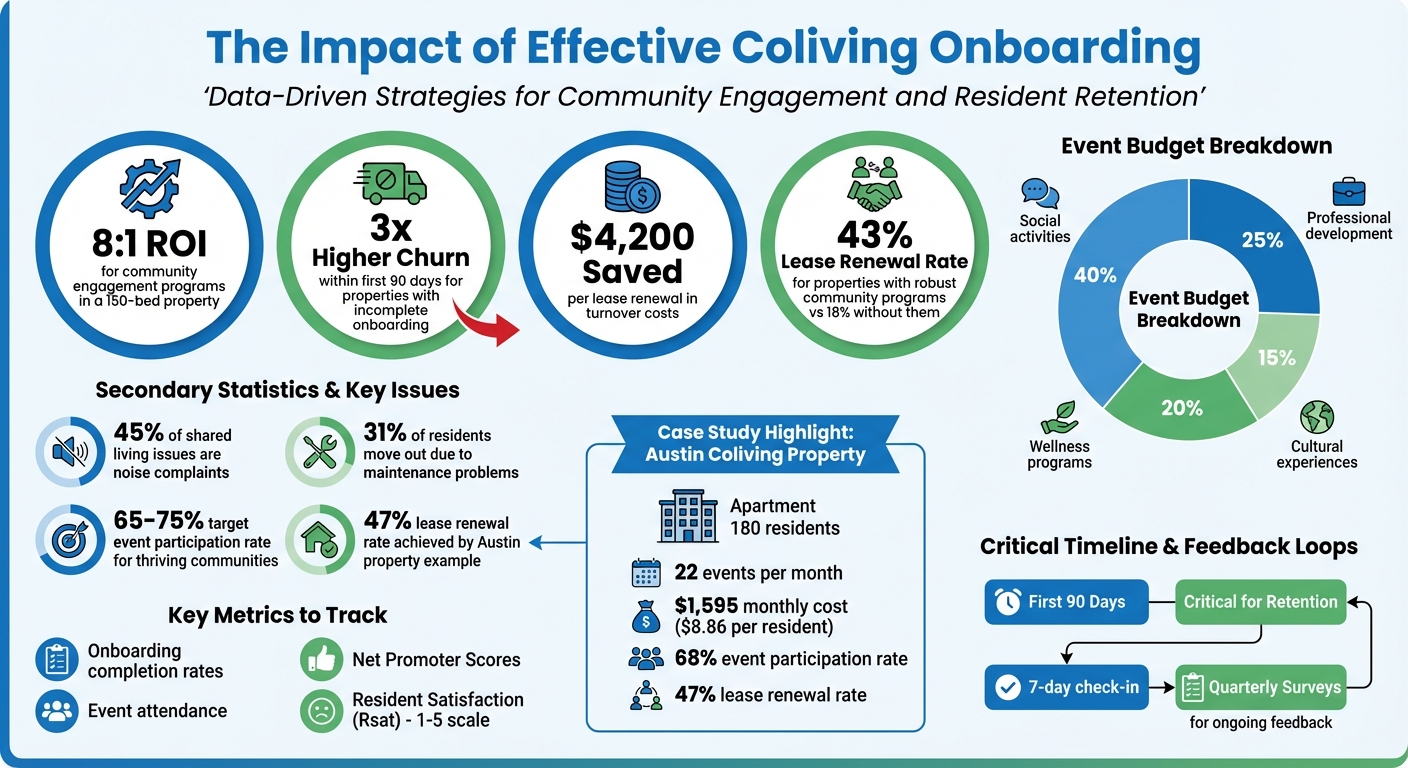
Coliving Onboarding Impact: Key Statistics on Retention and ROI
Pre-Arrival Preparation and Communication
The week leading up to move-in is crucial for setting expectations and reducing any pre-move jitters. Providing clear, detailed information during this time can make residents feel confident and help avoid confusion on move-in day.
Sending a welcome packet at least a week in advance is a great way to cover the essentials. Include items like digital access codes for front doors, the location of bedroom key lockboxes, WiFi passwords, rent payment methods and deadlines, trash and recycling schedules, and house rules. Be sure to highlight key policies - especially those regarding noise complaints, which make up about 45% of shared living issues. Also, clearly outline rules about late fees and smoking restrictions to avoid misunderstandings.
Send Personalized Welcome Emails
A friendly, personalized welcome email goes a long way in making residents feel at home before they even arrive. Start with a warm greeting that uses their name and include all the practical details they’ll need. Mention things like how to use property tech (e.g., smart locks or video intercoms), assigned move-in time slots, and parking or unloading instructions. Provide direct contact information for management, along with preferred communication hours and expected response times for non-emergency inquiries.
Financial transparency is key. Clearly state the rent amount (due on the 1st of each month), share the payment portal link, and explain any prorated costs for the first month. Outline late fee policies and remind residents to upload proof of renter’s insurance. Encourage them to complete a digital move-in checklist within the first three days, including photos, to document the property’s condition and safeguard their security deposit.
Share Required Documents and Policies
Being upfront about rules and procedures builds trust. Share copies of the signed lease, cancellation policies, and an FAQ document that addresses common concerns like utility setups, maintenance requests, and emergency protocols. Explain what qualifies as a maintenance emergency (e.g., a burst pipe) versus a life-safety emergency requiring a 911 call.
If you have a resident app or portal, make sure residents know how to use it. These platforms should allow 24/7 access to their lease, rent payments, and maintenance requests. Be clear about which maintenance tasks are their responsibility - like replacing lightbulbs, resetting modems, or changing AC filters - and include any cost thresholds. Adding a neighborhood guide with information about local grocery stores, restaurants, parks, and emergency services can help residents settle in more quickly.
Connect Residents Before Move-In
Help new residents feel like part of the community before they even step through the door. Send an automated invite to your community’s communication platform, such as Slack or Discord, and organize channels by house address. This way, residents can join their specific house chat and introduce themselves.
"Your new roomies will be in your house channel on Slack. It's time to say hello and introduce yourself." - HomeRoom Coliving Onboarding Guide
Early connections can make a big difference. Allowing residents to access a digital community calendar before move-in lets them see upcoming social events and feel included right away. Some operators even schedule a quick orientation call a few days before move-in to go over policies, answer questions, and discuss house dynamics. It’s a small gesture that emphasizes community and makes residents feel like they’re joining more than just a living space.
These thoughtful pre-arrival steps create a smooth transition and set the stage for a great move-in experience.
Make a Positive First Impression on Move-In Day
The first few hours after residents arrive can shape how they feel about choosing your community. Making their move-in experience smooth and welcoming is key. By building on pre-arrival preparations, you can turn this moment into a warm, memorable welcome.
Greet Residents in Person
A personal greeting from a community manager goes a long way in creating a friendly atmosphere. Handing over keys for the unit, mailbox, and shared amenities in person helps establish trust and shows you care.
If you can, assist with logistics like reserving elevators or guiding residents to unloading zones. These small acts not only ease the stress of moving day but also show that you’re there to help.
"A positive move-in experience can significantly improve tenant retention, as tenants are more likely to renew their lease when they feel comfortable and satisfied with their living situation." - David Bitton, Co-founder, DoorLoop
Provide Welcome Kits and Personal Touches
A thoughtful welcome kit can make a big difference. Include essentials like toilet paper, paper towels, trash bags, hand soap, and dish soap. Add a few local snacks or some coffee and tea to make the space feel cozy right away.
For an extra special touch, leave a handwritten note on the kitchen counter or door. Research from 2018 shows that handwritten notes can boost positive emotions and create a sense of well-being. This small effort can help residents feel like they’re not just renting a unit but finding a home.
Another useful addition? A laminated neighborhood guide with recommendations for restaurants, grocery stores, dry cleaners, and parks. This helps new residents settle in quickly and feel more connected to their surroundings.
Give House Tours and Orientation
Take the time to walk residents through their unit and shared spaces. Show them how to use key features like thermostats, smart locks, and appliances, and point out emergency exits and contacts.
Make sure they have all the essential details right away - Wi-Fi network info, gate codes, and emergency maintenance contacts. Leave a laminated card with this information in a visible spot for easy reference. During the walkthrough, document the unit’s condition together. This step can prevent disputes about security deposits later on.
"The moment your new tenant receives the keys is a critical one. It's their first tangible step into their new home, and a smooth handover leaves a positive, lasting impression." - ChecklistGuro
Help Residents Build Community Connections
Once residents have moved in, the next step is helping them feel like they belong. Building connections early on plays a big role in keeping residents happy and encouraging lease renewals. Taking the right steps can create a foundation for strong, lasting community ties.
Host Welcome Events
Kick things off with casual gatherings during a new resident's first week. Events like a welcome dinner, game night, or happy hour make it easy for everyone to meet in a relaxed environment. Keep the vibe informal - label events with casual names like "coffee time" to encourage attendance.
To keep the momentum going, plan a diverse mix of activities throughout the month. Communities that thrive often offer a variety of events, from social and professional meetups to wellness and hobby-focused gatherings. Aim for a participation rate of 65% to 75% - this level of involvement can help create a truly connected community.
Support Resident-Led Activities
Long-term residents can be key to creating a welcoming atmosphere. Pairing new arrivals with established residents through a buddy system during their first week can make the transition smoother. Encourage residents to share their talents and interests by hosting their own activities, such as cooking classes, book clubs, or coworking sessions. These shared experiences not only help new residents adjust but also create meaningful connections.
Use Coliving.com's Community Features
Coliving.com offers tools to help residents connect with housemates who share similar interests - even before they move in. The platform’s matching features link residents with like-minded individuals across the globe. Suggest that new residents use these tools to find potential friends or activity partners. Additionally, consider setting up communication channels like Slack or WhatsApp for daily updates, event announcements, and house activities to keep everyone in the loop.
"You're not in the real estate business. You're in the people business that happens to involve real estate. The moment you understand that distinction, everything changes." – Maria Gonzalez, VP of Community Operations, Common Living
Provide Continued Support and Collect Feedback
Offering ongoing support after a tenant moves in strengthens trust and minimizes potential issues. Building on the initial welcome, staying engaged and responding promptly to concerns ensures satisfaction and encourages longer leases. Regular communication and attentiveness show residents that their experience truly matters.
Schedule Regular Check-Ins
Reach out to new residents exactly seven days after they move in, using their preferred communication method. This timing allows them to settle in and identify any concerns while the experience is still fresh. Ask open-ended questions like, "Is there anything we can help you with?" or "Do you have any questions or concerns we can address?" These types of questions often reveal issues residents might hesitate to bring up on their own.
"Following up after one week with the onboarded tenant... demonstrates your company's attentiveness and professionalism, and goes a long way toward boosting retention rates."
Aim to address any concerns within two hours and resolve issues within 24–48 hours. Quick action prevents small frustrations from escalating. Considering that maintenance problems are the reason 31% of residents move out, fast resolutions make a noticeable difference.
These check-ins not only help resolve immediate issues but also open the door for ongoing feedback and improvement.
Collect Feedback to Improve Your Process
Send out a short survey one week after move-in, asking residents to rate their satisfaction on a scale of 1 to 5. This metric, known as Resident Satisfaction (Rsat), provides valuable insight into how well your onboarding process is working. Follow up with quarterly surveys to identify issues that might otherwise go unreported.
Keeping a close eye on onboarding completion is crucial, as properties with incomplete processes experience 3x higher churn within the first 90 days. When residents share feedback, take action and let them know how their input has influenced changes. For example, if you’ve updated a policy or added a new amenity based on their suggestions, communicate this clearly. This transparency fosters a sense of ownership and strengthens the community connection.
Keep Residents Engaged with Community Programs
Engagement doesn’t stop at feedback - it thrives through community-building events. Allocate event planning resources as follows: 40% to social activities, 25% to professional development, 20% to wellness, and 15% to cultural experiences. For a property with 150 residents, aim to host 20 to 25 events per month to maintain strong engagement.
Take inspiration from a coliving property in Austin, Texas, that hosted 22 events monthly for its 180 residents. Activities included Taco Night dinners, resume workshops, and morning yoga sessions, costing $1,595 per month (about $8.86 per resident). These efforts led to a 68% event participation rate and a 47% lease renewal rate. Properties with robust community programs see renewal rates as high as 43%, compared to just 18% for properties without them. Considering that every lease renewal saves approximately $4,200 in turnover costs, investing in engagement programs is a smart, cost-effective strategy.
Our conclusion
Turning new arrivals into engaged community members starts with effective onboarding. This process kicks off well before move-in day, relying on careful preparation and clear, personalized communication. Explaining lease terms in straightforward language and fostering early connections with housemates are key steps. The move-in day itself is a pivotal moment - personal greetings and thoughtful welcome gestures can set a positive tone that resonates long after.
Building a sense of community isn’t just a nice-to-have; it’s the backbone of successful coliving. Strong community engagement leads to higher renewal rates and measurable financial returns - typically yielding an 8:1 ROI for a 150-bed property. Continued support and timely communication only strengthen these outcomes.
"You're not in the real estate business. You're in the people business that happens to involve real estate. The moment you understand that distinction, everything changes." - Maria Gonzalez, VP of Community Operations, Common Living
The first 90 days are especially important. Poor onboarding during this period can lead to early turnover. Regular check-ins and proactive conflict resolution can stop small issues from spiraling into bigger problems. Keep an eye on your metrics - like onboarding completion rates, event attendance, and Net Promoter Scores - to identify areas for improvement.
Onboarding isn’t a one-and-done task; it’s an evolving process shaped by resident feedback. Operators who succeed know how to adapt, blending efficiency with personal connection. Every interaction matters, shaping both the resident experience and the overall reputation of your property.
FAQs
What should be included in a strong pre-arrival communication plan for new residents?
Getting new residents off to a great start begins with a solid communication plan before they even move in. The key is to provide clear, timely information to help them feel ready and welcomed. Share essential details like move-in procedures, access instructions (such as entry codes or key pickup), community rules, and available amenities. Sending this information through email or a dedicated app can go a long way in reducing confusion and ensuring everyone feels prepared.
A thoughtful touch is a welcome email or package that includes practical details like Wi-Fi passwords, emergency contacts, and even a neighborhood guide. This small gesture can make new residents feel valued and at ease.
It's also important to set up reliable communication channels. Whether through automated messages or a responsive support team, giving residents a way to ask questions or voice concerns before move-in day can make all the difference. These efforts not only simplify the onboarding process but also help build a sense of community from the very beginning.
How do welcome events help build a stronger community in coliving spaces?
Welcome events are a fantastic way to create a sense of belonging and help new residents settle into a coliving space. Whether it’s a potluck, a game night, or a workshop, these activities open the door for residents to meet, connect, and build real relationships. They’re perfect for breaking the ice and setting the stage for a warm, inviting atmosphere.
These gatherings also serve a practical purpose. They give residents the chance to get familiar with shared spaces, understand community guidelines, and learn about expectations - all in a laid-back environment. When done right, a welcome event can boost resident satisfaction, foster trust among housemates, and encourage deeper involvement, making the community feel more connected and lively.
Why is ongoing support important for keeping new residents engaged?
Supporting new residents during their early days in a community is crucial for making them feel welcome, secure, and connected. The first 90 days are often a decisive period for retention. During this time, regular check-ins, addressing their concerns, and helping them build connections can significantly influence their choice to stay. These efforts send a clear message: residents are valued members of the community, making it easier for them to settle in and feel at home.
But the work doesn’t stop after onboarding. Providing ongoing support encourages residents to engage in community activities, which strengthens their sense of belonging. Scheduled follow-ups - at 30, 60, and 90 days - are particularly effective in improving retention. This approach not only enhances the overall experience for residents but also benefits operators by reducing turnover and fostering a stable, thriving community.