

Long-term tenants mean steady income and fewer turnover costs for coliving operators. Here's how to attract and retain them:
- Flexible Lease Options: Offer month-to-month leases for newcomers and discounted two-year leases for stability. Discuss renewals 90+ days before expiration and consider incentives like rent stability or waived fees.
- Community Building: Host regular events (social, professional, wellness) and use tech tools like Slack for ongoing engagement. Properties with active communities see 43% renewal rates vs. 18% without.
- Property Maintenance: Address repairs within 24 hours and schedule regular upkeep (e.g., HVAC checks, pest control). Well-maintained properties retain tenants longer.
- Valuable Amenities: Provide coworking spaces, wellness areas, and eco-friendly features like energy-efficient appliances. Tenants value spaces that align with their lifestyles.
- Lease Renewal Programs: Use tenant data to personalize offers, set clear deadlines for renewals, and reward early commitments with perks like rent discounts or upgrades.
Platforms like Coliving.com help find tenants aligned with your property’s values, reducing marketing efforts and boosting retention. Focus on creating a welcoming environment, and your tenants will want to stay.
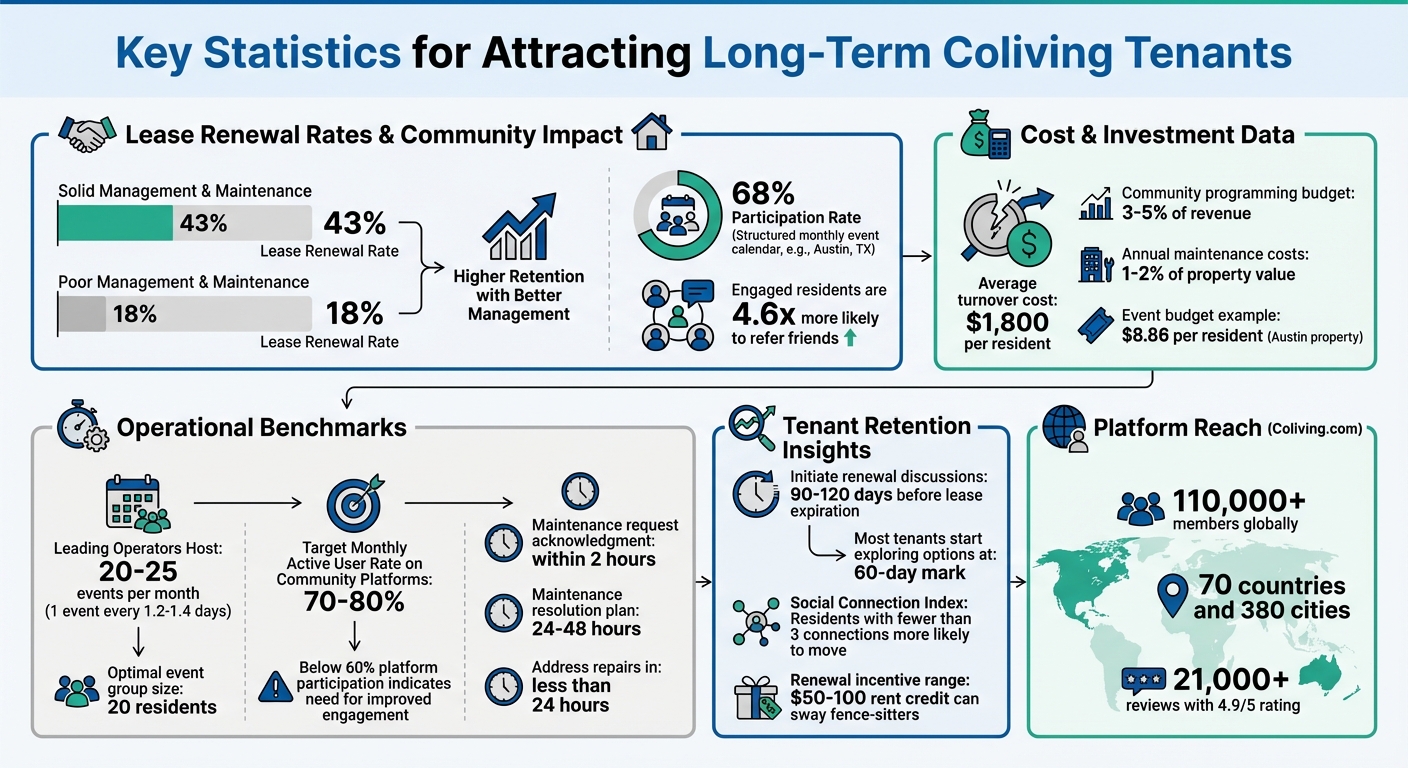
Key Statistics for Attracting Long-Term Coliving Tenants
Offer Flexible Lease Options
Today's renters appreciate flexibility. By offering lease terms that cater to different needs - like short-term options for those testing the waters and longer terms for those seeking stability - you can lower the barriers to entry and build trust with potential tenants. This flexibility also creates opportunities to introduce incentives that encourage long-term commitments.
Provide Multiple Lease Duration Options
Tailoring lease terms to meet a variety of tenant preferences can make your property more appealing. For example, month-to-month leases are ideal for newcomers who want to ensure compatibility with their living situation before committing to a longer-term agreement. Once they feel settled, many renters naturally transition to a 12-month lease.
For those looking for stability, consider offering two-year leases at a discounted rate. This approach not only guarantees steady income for you but also provides tenants with predictable housing costs. As Justin Chaplin from Apartment List explains, extending a lease to two years at a reduced rate "works as a great incentive and reward for a great long-term tenant." Plus, it helps you avoid the average turnover cost of around $1,800 per resident while offering tenants below-market rent - a win-win for both sides.
Create Incentives for Lease Renewals
Initiating renewal discussions at least 90 days before a lease expires is a smart move. It gives tenants plenty of time to weigh their options while allowing you to prepare in case they decide to move. Engaging early reduces the chances of them exploring other rental options.
One of the most effective ways to encourage renewals is through rent stability. Keeping rent increases at or below the market average can make a big difference. Megan Bullock from Apartments.com notes, "A large rent increase is a major reason why tenants choose to move out of their rental and find a new home." Additional incentives, like waiving parking or pet fees, offering a free month of rent, or providing professional cleaning services, can also make renewing more appealing. Small upgrades, such as replacing cabinet hardware or installing smart locks, add extra value. Even a $50 to $100 rent credit can sway a tenant who’s on the fence.
Another effective tactic is rolling over the existing security deposit to the new lease term. This removes financial hurdles and makes the renewal process seamless. These thoughtful gestures show tenants that you value their loyalty and genuinely want them to stay.
Build a Strong Community
Creating a strong sense of community can turn a coliving property into more than just a place to stay - it becomes a true home. When residents feel connected to each other and engaged in their surroundings, they’re much more likely to renew their leases. Operators typically allocate 3–5% of their revenue toward community programming, and the payoff is clear. Engaged residents are 4.6 times more likely to refer friends compared to those who feel disconnected, creating a steady flow of quality tenants. These numbers highlight the importance of taking actionable steps to foster engagement.
Host Regular Community Events
Face-to-face interaction is key to building meaningful relationships among residents. Organizing events that balance social, professional, wellness, and cultural themes ensures there’s something for everyone, appealing to the diverse interests of tenants.
Take, for example, a coliving property in Austin, TX, which, in November 2024, introduced a structured monthly event calendar. With a modest budget of $8.86 per resident, the property achieved an impressive 68% participation rate. Leading operators aim for 20–25 events per month, averaging one every 1.2 to 1.4 days. Keeping group sizes around 20 ensures events remain intimate, helping residents form genuine connections without feeling overwhelmed.
Use Technology to Keep Tenants Connected
While in-person events are vital, technology plays a crucial role in keeping residents engaged between gatherings. Tools like Slack or Discord are excellent for community announcements, interest-based group chats, and managing event RSVPs. Successful operators aim for a monthly active user rate of 70–80% on their platforms, as participation below 60% indicates the need for improved engagement strategies.
In 2024, Spanish coliving operator Badi adopted Polaroo, a platform that streamlined the management of utilities like water, electricity, and internet across its properties. This change saved over 1,400 administrative hours and cut costs by roughly $12,000. Automating tasks like utilities and maintenance requests frees up operators to focus on strengthening relationships with residents. Technology should act as a bridge, making it easier to connect tenants digitally while encouraging participation in face-to-face events.
Maintain Your Property Consistently
Keeping a property in good shape sends a clear message to tenants: you care about their living experience. When tenants see regular upkeep and timely repairs, they're much more likely to stick around. In fact, properties with solid management and maintenance practices enjoy a 43% lease renewal rate, compared to just 18% for properties that fall short in these areas. This approach not only keeps tenants happy but also cuts down on turnover costs, shortens vacancy periods, and helps maintain the property's value over time.
In coliving spaces, where shared areas experience heavy use, quick maintenance responses are especially important. Leading operators aim to address maintenance requests in less than 24 hours, showing tenants that their concerns matter. By staying on top of maintenance, you build trust with tenants and create a smoother, more efficient operation.
"A well-maintained property not only retains its value but also attracts and keeps good tenants. Prioritizing property maintenance ensures that you can address any issues and handle repairs promptly, leaving the tenant satisfied and more likely to renew their lease." - Zoe Harper, Marketing, Steadily
Set Up Routine Maintenance Schedules
A structured maintenance plan can prevent minor issues from spiraling into costly repairs. Establish a schedule that covers daily, monthly, and seasonal tasks to ensure nothing slips through the cracks. For example:
- Monthly tasks: Test smoke and carbon monoxide detectors, replace HVAC filters, and check all lighting fixtures.
- Quarterly inspections: Focus on major appliances, checking for leaks, strange noises, or debris buildup.
- Bi-annual deep checks: Conduct these in spring and fall to prepare for seasonal changes. Include professional pest control, plumbing inspections for leaks, and thorough cleaning of air vents and ducts.
Annual maintenance often requires specialized attention. Flush water heaters to remove sediment, inspect the roof for damage, and hire an electrician to test outlets and the breaker panel. On average, landlords spend 1% to 2% of a property's value annually on maintenance, an investment that pays off in the form of longer property life and happier tenants.
To stay on top of these tasks, consider using digital tools like Trello, Any.do, or Google Calendar. Automated reminders can help you keep preventive maintenance on track. When tenants see you proactively managing the property, they’re more likely to report small issues - like a flickering light or a tiny leak - before they turn into major problems.
Use Digital Maintenance Request Systems
Alongside a solid maintenance schedule, digital request systems make it easier to handle tenant concerns quickly and efficiently. These systems let tenants submit requests instantly, often with photos or videos to clearly show what needs fixing. This streamlines communication, eliminating the back-and-forth of phone calls and emails, and gives your team the information they need to prepare for repairs.
A centralized dashboard can help you track and organize requests, ensuring nothing gets overlooked. Automated notifications and built-in chat features keep tenants informed throughout the process, from acknowledgment to resolution. This level of transparency is especially valuable in coliving spaces, where fast, visible action on maintenance issues reinforces your commitment to a high-quality living environment.
Aim to acknowledge maintenance requests within 2 hours and provide a resolution plan within 24 to 48 hours. This approach keeps tenants confident in your management and helps build trust. Plus, digital systems free up your team to focus on more strategic tasks rather than chasing down requests. The result? Higher renewal rates, lower turnover costs, and a smoother operation overall.
Provide Amenities That Add Value
Once you've tackled proactive property maintenance, the next step to keeping tenants happy is offering amenities that genuinely improve their living experience. The right amenities can encourage tenants to stay longer. Features like functional workspaces, environmentally conscious options, and engaging community activities show tenants you understand their needs. These additions not only build loyalty but also cut down on costly turnovers. Operators often allocate around 3% to 5% of their revenue to maintain amenities and fund community programs. The secret? Focus on amenities that truly matter to tenants, not just those that look good in marketing photos. Let’s dive into the kinds of amenities that promote balanced lifestyles and a sense of sustainability.
"You're not in the real estate business. You're in the people business that happens to involve real estate. The moment you understand that distinction, everything changes." - Maria Gonzalez, VP of Community Operations, Common Living
Include Work-Life Balance Amenities
Tenants juggling work and personal life appreciate amenities that cater to both. For productivity, consider coworking spaces equipped with fast internet, ergonomic seating, and private phone booths. But work isn’t everything - dedicated areas for relaxation are just as important. Wellness spaces for yoga or meditation and social hubs like shared kitchens with islands or cozy lounges can help tenants unwind and connect with others. Flexible spaces that adapt to different needs - like modular coworking areas that can double as event spaces - are also a big draw. Don’t overlook soundproofing; noise is one of the top complaints in shared spaces. Add conveniences like all-inclusive utilities and 24/7 access to common areas to make daily life easier.
Add Sustainability Features
Eco-conscious renters are drawn to properties that align with their values. Energy-efficient appliances, smart thermostats, and LED lighting not only appeal to this group but can also reduce long-term operating expenses. Programs for recycling, composting, or even community gardens give tenants the chance to actively participate in sustainable practices. These features not only attract tenants but also keep them around longer - people are more likely to stay when their living environment reflects their priorities. Even small upgrades, like replacing noisy fans in kitchens and bathrooms, can make a shared space more inviting. A growing trend is transforming unused office buildings and hotels into sustainable coliving spaces, proving that operators are finding creative ways to meet demand while revitalizing urban areas. By weaving sustainability into your property’s identity, you’re not just offering a place to live - you’re creating a community where tenants feel connected to a larger purpose.
Create a Lease Renewal Program
Start the renewal conversation with tenants early to stay ahead of their search for alternatives. Properties that initiate discussions 90 to 120 days before a lease expires often outperform competitors since most tenants begin exploring other options around the 60-day mark. For example, Cardinal Group Management in Denver adopts this proactive strategy by reaching out to residents well before they consider moving. Laurie Lyons, Partner at Cardinal Group Management, explains: "If the industry is trying to get renewals 60 or 90 days out, we go 90 or 120 days out." This early engagement not only shows tenants they’re valued but also provides plenty of time to address any concerns and craft tailored renewal offers.
Use Tenant Data to Customize Offers
Tailoring renewal offers based on tenant habits and preferences is a great way to strengthen long-term relationships. Generic, one-size-fits-all offers are no longer enough. Instead, track how tenants interact with your property: Do they attend community events? How often do they use amenities like the coworking space or gym? If maintenance records show recurring issues, consider including an upgrade in their renewal package. For tenants who actively participate in social events, you could offer a referral bonus or a discount on their next gathering.
Pay close attention to the Social Connection Index - a measure of how many friendships a tenant has formed within the property. Residents with fewer than three connections are more likely to move. If you notice a drop in someone’s engagement, reach out personally to understand what’s changed. Use property management software to centralize this data and identify trends. For instance, a tenant facing a rent increase might agree to stay if offered a two-year lease with a locked-in rate. Meanwhile, someone who values flexibility could prefer a shorter lease paired with perks like a complimentary deep cleaning service.
Set Clear Renewal Deadlines
Once you’ve crafted personalized offers, establish clear timelines for renewals. Create a sense of urgency without pressuring tenants. Offer incentives for early commitments - such as a one-time rent discount, a professional deep clean, or even letting them choose a pre-approved paint color for an accent wall - if they renew 90 days in advance. Tie these perks to specific deadlines so tenants understand the benefits of acting early. For properties with high-demand floor plans, you might also implement "Save Your Space" deadlines, giving current residents priority before marketing units to new prospects.
Leverage automated lease management tools to send timely reminders and track responses. Make the renewal process seamless by enabling digital options. Be transparent about any rate changes, explaining factors like market trends or recent property upgrades, such as new lighting or improved HVAC systems. As Johanna Adolfs, Director of Marketing and Strategy at Cardinal Group, emphasizes: "Renewals should always be a priority over signing new leases as the community will, in turn, save a lot of money on turn costs and marketing." When tenants see fairness and honesty in your approach, they’re more likely to renew and stick around.
Use Coliving.com to Find the Right Tenants
Finding the right tenants from the start can make all the difference, and Coliving.com connects property owners with a global network of over 110,000 members actively searching for coliving spaces in more than 70 countries. These members include digital nomads, remote workers, young professionals, and entrepreneurs looking for long-term stays. With 21,000+ reviews and an impressive 4.9/5 rating, the platform fosters trust even before tenants reach out. By using Coliving.com, you set yourself up for success by securing quality tenants right from the beginning.
The platform also eliminates the need for expensive marketing efforts. Tools like iCal integration and a channel manager automatically sync availability, allowing you to focus on building strong tenant relationships - an essential part of retention. Plus, properties listed on Coliving.com can achieve Elite Host status, signaling reliability and a top-tier experience for tenants. This badge helps your property stand out while showcasing its all-inclusive perks in a seamless way.
Showcase All-Inclusive Features
Transparency is key for tenants browsing Coliving.com. They want to know exactly what’s included in their rent. Use your listing to highlight that your property offers utilities, high-speed Wi-Fi, and professional cleaning services bundled into one simple monthly payment. Clear, all-inclusive pricing removes surprises and makes the move-in process effortless.
Take it a step further by spotlighting amenities that make life easier and more enjoyable, such as coworking spaces, streaming subscriptions, and fully equipped kitchens. These extras not only justify premium pricing but also attract tenants who value convenience. The platform also simplifies operations by handling everything online, from rental agreements to automated rent collection.
Highlight Community-Oriented Spaces
Beyond amenities, creating a sense of community is a powerful way to draw in the right tenants. Coliving.com allows you to categorize your property under 60+ community types, such as "Remote Workers", "Entrepreneurs", or "Nature Lovers." These filters help you connect with tenants whose lifestyles and values align with your space. For instance, a property designed for wellness enthusiasts could focus on yoga studios and nearby hiking trails, while a tech-forward space might emphasize ultra-fast Wi-Fi and collaborative work areas.
Use your listing to showcase the shared spaces that bring people together, like rooftop terraces, communal kitchens, or event rooms. Include photos and mention activities such as weekly dinners, workshops, or group outings, so potential tenants can imagine themselves being part of the community. When your listing reflects a focus on meaningful connections, you’ll attract tenants who are more likely to stay long-term.
Conclusion
Winning over long-term tenants comes down to offering thoughtful lease options, building a sense of community, and keeping your property in excellent shape. Flexible lease terms and renewal perks show tenants you care about their needs, while community-focused activities encourage them to stay longer, cutting down on costly turnover.
But it doesn't stop there. Keeping the property in great condition and offering amenities that truly matter can make all the difference. Staying on top of maintenance requests and adding features like coworking spaces for a better work-life balance show tenants that their comfort and experience are top priorities. These efforts go a long way in boosting tenant satisfaction and lease renewals.
A well-planned lease renewal program helps you stay ahead. By using tenant data to create personalized renewal offers and setting clear deadlines, you show residents they’re more than just renters - they’re part of a valued community. Happy tenants are also your best advocates, often bringing in referrals that grow your tenant base organically.
To make managing all this easier, Coliving.com steps in as a valuable partner. With access to a global network spanning 380 cities across 70 countries, the platform simplifies tenant acquisition and management. From handling bookings to managing availability, Coliving.com lets you focus on creating a thriving community that keeps tenants coming back year after year.
FAQs
Why is offering flexible lease options important in coliving spaces?
Flexible leasing options are a big reason why coliving spaces are gaining popularity. They let people pick lease terms that match their lifestyle - whether that's a short stay or a longer commitment. This approach opens the door to a more diverse group of tenants, including professionals, students, and remote workers, making coliving an appealing choice for many.
For property operators, offering flexible leases can boost occupancy rates and improve tenant satisfaction. When operators cater to varying needs, they create stronger connections with tenants, which often leads to better retention and more stability for the property in the long run.
How do community events help retain long-term tenants in coliving spaces?
Community events play a big role in creating a sense of connection and belonging in coliving spaces. Hosting activities like potlucks, game nights, workshops, or hobby groups gives residents a chance to interact, form friendships, and build a supportive living environment. These shared experiences can make daily life more enjoyable and help foster stronger relationships among tenants.
When people feel connected and appreciated, they’re more likely to stay longer, which benefits property owners by reducing turnover and vacancy costs. A thoughtfully planned event calendar doesn’t just make life more enjoyable for residents - it also helps boost tenant retention. It’s a win-win for creating a vibrant and thriving coliving community.
Why is proactive property maintenance important for keeping long-term tenants?
Proactive property maintenance plays a key role in retaining long-term tenants. It ensures that your property remains safe, functional, and visually appealing. When tenants see that their comfort and well-being are a priority, it builds trust and strengthens their decision to renew leases.
Taking care of small issues before they escalate into larger problems can save money on expensive repairs, prevent unnecessary disruptions, and enhance the overall living experience. A well-kept property also attracts reliable tenants who are more likely to stick around, offering steady rental income and cutting down on turnover expenses.