
Creating spaces where people want to live isn’t just about aesthetics - it's about designing environments that balance privacy, community, and comfort while incorporating smart, practical features. Here’s what you need to know:
- Private and Shared Spaces: Combine personal quiet zones with communal areas that naturally encourage interaction. Use soundproof materials, movable partitions, and multi-functional furniture to maximize comfort and flexibility.
- Community Building: Design shared spaces like kitchens and lounges to promote social connections. Add features like event programming, recreational amenities, and wellness spaces to strengthen resident engagement.
- Natural Light and Eco-Friendly Design: Optimize natural light with strategic window placement and energy-efficient materials. Include elements like solar panels, induction cooktops, and rainwater systems to reduce costs and improve air quality.
- Smart Technology and Security: Install smart locks, thermostats, and resident apps to simplify daily routines. Enhance safety with AI-powered cameras, secure package lockers, and layered security systems.
Key Stats: Properties with intentional design and active programming see a 43% lease renewal rate (compared to 18% otherwise), saving $4,200 per renewal. Engaged residents are also 4.6x more likely to refer friends, creating a steady tenant pipeline.
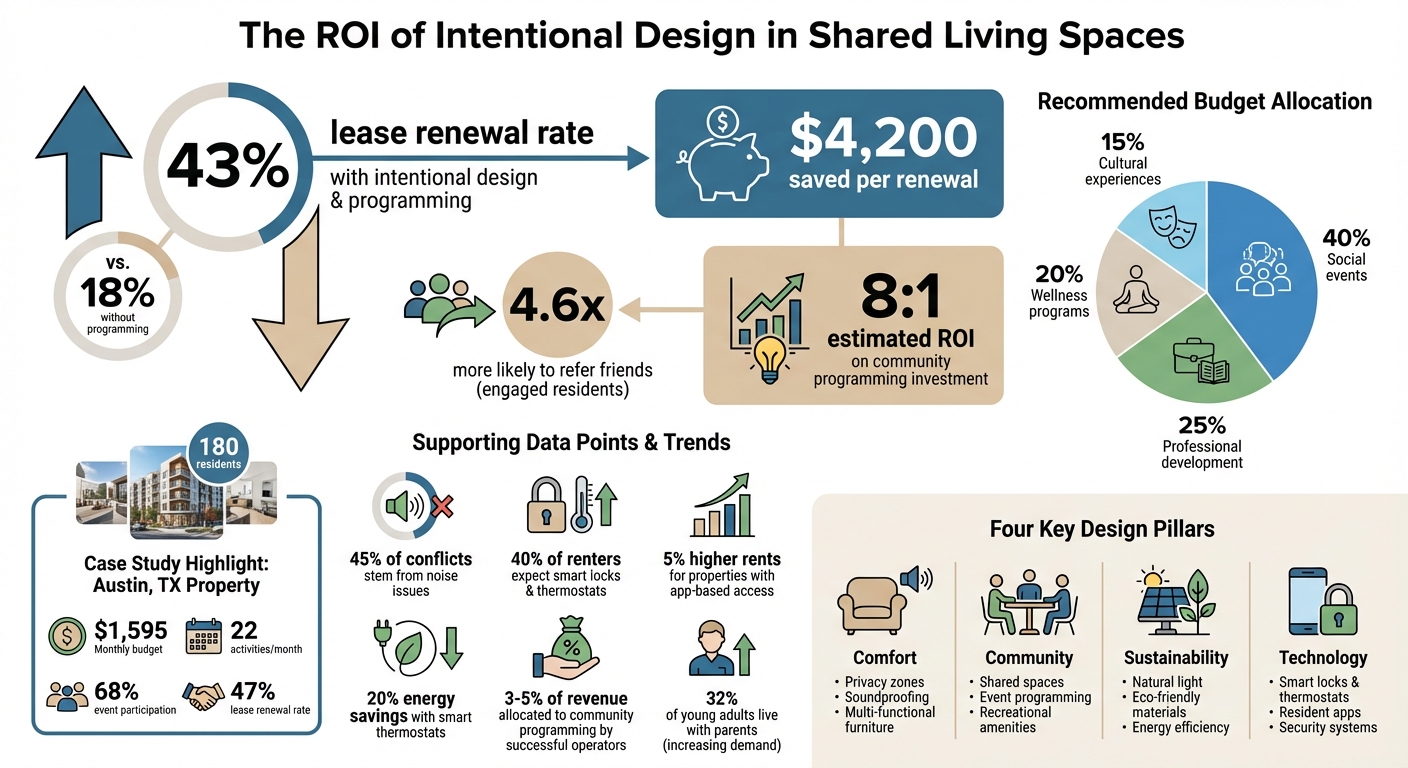
Impact of Intentional Design on Coliving Property Performance and ROI
How to Optimize Layouts for Comfort and Functionality
The backbone of any well-designed shared living space lies in its layout. A carefully planned setup allows residents to transition smoothly between work, relaxation, and social activities, creating an environment where community thrives. Let’s explore how to strike the right balance between shared and private areas while making the most of available space.
Balance Shared and Private Spaces
Striking a balance between communal and private areas is key to ensuring comfort in coliving spaces. Privacy is a fundamental need, even in shared environments. Incorporating elements like movable partitions, soundproof nooks, and flexible walls can give residents more control over their personal space. Interestingly, noise issues account for 45% of conflicts in coliving arrangements[3]. To address this, consider positioning quiet zones away from busy areas and using sound-absorbing materials in walls and ceilings to reduce disruptions.
Use Multi-functional Furniture and Efficient Layouts
When space is tight, making the most of vertical areas becomes essential. Features like wall-mounted foldable desks, floor-to-ceiling shelving, and lofted sleeping arrangements help free up floor space without compromising on comfort. Open-plan designs that define separate zones for cooking, working, and relaxing can also make shared spaces more adaptable.
Furniture that serves multiple purposes can further enhance functionality. Think sofa beds, Murphy beds, expandable dining tables, and storage ottomans. Choosing pieces that can adapt to changing needs ensures the space remains practical and uncluttered.
Design Shared Areas That Build Community
Create Inviting Common Areas
The way shared spaces are designed plays a big role in encouraging interactions among residents. One effective approach is the "caves and commons" layout, where private bedrooms are arranged around central communal areas. This setup increases the chances of spontaneous encounters as residents naturally pass through shared spaces like kitchens or lounges during their daily routines.
The kitchen, in particular, serves as a powerful social hub. Adding features like large islands, multiple sinks, and efficient appliances allows multiple residents to cook at the same time without stepping on each other’s toes. This turns cooking from a solo chore into an opportunity for collaboration and connection. To enhance the ambiance, use layered lighting - think string lights, floor lamps, and dimmable fixtures - to create a cozy and welcoming environment. Keeping these common areas open around the clock ensures accessibility for everyone, whether they work late shifts or live in different time zones.
Strategic placement of amenities also helps foster interaction. For example, placing coffee stations or mail areas along main walkways creates natural gathering spots where residents are likely to cross paths. To keep these areas comfortable, incorporate sound-absorbing elements like rugs, acoustic panels, and upholstered furniture. This ensures lively conversations in shared spaces don’t disrupt quieter zones.
Beyond these casual encounters, adding recreational features can help deepen the sense of community among residents.
Add Recreational and Social Features
Recreational amenities take shared spaces to the next level by offering residents a reason to gather beyond their everyday routines. For example, a coliving property in Austin, TX, with 180 residents introduced a monthly event schedule in 2024 featuring 22 activities like "Taco Night" dinners, yoga classes, and resume workshops. With a modest $1,595 monthly budget, the property achieved a 68% event participation rate and an impressive 47% lease renewal rate - far above the 18% industry average for properties without such programming.
Wellness-focused features are also gaining traction. At Neighborhood Zero, a coliving community managed by Cabin, a communal sauna has become a nightly favorite among residents, fostering both social connections and health benefits. Other popular additions include game rooms, outdoor patios, meditation gardens, and even podcast studios for digital creators.
To ensure a well-rounded experience, programming should cater to a variety of interests. A balanced mix might include 40% social events, 25% professional development activities, 20% wellness-focused programs, and 15% cultural experiences. This approach not only meets diverse resident needs but also helps foster meaningful connections across the community.
Add Natural Light, Ventilation, and Green Design
Maximize Natural Light and Ventilation
The way windows are positioned and how spaces are laid out can greatly affect the amount of natural light a building receives. To make the most of daylight, aim for south-facing windows that cover 5%–12% of the floor area, while keeping glazing on the north, east, and west sides under 4%, 4%, and 2%, respectively. This approach ensures a balance between brightness and energy efficiency.
Keep the window-to-wall ratio at or below 40% to maintain this balance. Natural light can typically reach about 2.5 times the height of a window, but for deeper spaces, adding skylights or atriums can help extend daylight further into the building. Using light-colored walls and ceilings also helps reflect and spread natural light more evenly.
For a functional layout, place high-activity areas like kitchens and laundry rooms along south-facing walls to make the most of daylight. Private spaces, such as bedrooms, can be located on the north-facing or interior areas to take advantage of softer, more consistent light. When it comes to ventilation, focus on creating a tight building envelope. A continuous air barrier on all six sides of the structure, combined with proper insulation, is essential for comfort and energy efficiency. These adjustments not only improve the living experience but also encourage residents to spend more time in shared spaces.
Once lighting and ventilation are optimized, the next step is to incorporate eco-friendly materials and energy-efficient systems to complete a sustainable design.
Use Eco-friendly Materials and Energy-efficient Features
After ensuring the best use of natural light and airflow, integrating sustainable materials and energy-efficient systems can further improve shared living spaces. Switching to electric appliances is a key step. For instance, replacing gas stoves with induction cooktops and using heat pumps instead of traditional heaters can significantly enhance air quality and reduce environmental impact. Radiant heating systems are another great option - they provide consistent warmth without drafts or dust, making them ideal for individuals with allergies or respiratory issues.
Using salvaged or recycled materials and low-VOC finishes can also make a big difference. These choices not only improve air quality but also minimize long-term health risks. A great example is the DPR Sacramento Office, which converted a 1940s building into an all-electric workspace. With a high-performance envelope and passive design, the building's rooftop solar panels generate up to 105% of its energy needs.
For water conservation, installing a below-ground cistern system is worth considering. The Tyson Living Learning Center, for example, uses a cistern and photovoltaic system to reduce both water and energy costs. They also sourced structural wood locally to cut transportation emissions. Since lighting accounts for about 10% of household electricity use, providing task lighting in shared spaces can help residents lower ambient lighting levels without sacrificing functionality.
| Feature | Pros | Cons |
|---|---|---|
| Low-VOC Materials | Improves air quality; reduces long-term health risks | Higher cost; limited availability in some regions |
| Radiant Heating | Comfortable, draft-free warmth; better air quality | More complex to install during renovations |
| Induction Cooktops | Faster cooking; better air quality; lowers carbon emissions | Higher upfront cost; requires specific cookware |
| Solar Panels | Cuts electricity bills; can achieve net-positive energy generation | High initial investment; effectiveness depends on location |
| Rainwater Cisterns | Reduces water bills; provides backup during shortages | Requires space and regular maintenance |
Adding biophilic elements like living walls, indoor plants, or rooftop gardens can further enhance shared spaces. These features not only reduce stress but also encourage community interaction. For example, Marion Fire Station No. 1 in Iowa incorporated large windows, natural materials, and operable glass to support mental health and reduce PTSD risks among firefighters. Including edible gardens or food forests can add both visual appeal and fresh produce for residents. In areas with limited natural light, color-tunable electric lighting can mimic natural daylight cycles, supporting residents' circadian rhythms. These thoughtful additions create healthier, more connected spaces where people feel truly at home.
Ensure Privacy, Flexibility, and Accessibility
Design for Privacy and Quiet Zones
Did you know that 45% of conflicts in shared living spaces stem from noise complaints? That’s why soundproofing isn’t just a nice-to-have - it’s essential. Privacy should be baked into the design from the start. Think thicker wooden walls, acoustic panels, and upholstered furniture to create effective barriers between noisy social areas and quiet sleeping zones. The "caves and commons" approach, which separates private and communal spaces, works wonders here.
But privacy isn’t just about walls. Acoustic zoning can include heavy rugs, curtains, and other sound-absorbing materials to reduce noise transfer. For an added layer of privacy, group living units into smaller clusters of 6–8 rooms, each sharing a kitchen or lounge. This setup fosters closer connections without overwhelming residents. Quiet zones can also be visually defined through dimmable lighting and soft furnishings, creating a clear distinction between active and relaxation spaces.
Once these privacy measures are in place, the next step is to ensure the space can adapt as residents’ needs evolve.
Adapt Layouts for Changing Needs
Flexibility starts with open, adaptable structures. Wider column spans and higher floor-to-floor heights make it easier (and cheaper) to reconfigure spaces. Use non-load-bearing walls supported by columns and beams to allow layouts to change over time. This is especially important as 32% of young adults now live with their parents, increasing the demand for spaces that can grow and transform.
Furniture can play a big role in adaptability. Murphy beds, fold-out tables, and lightweight wheeled furniture make it simple to switch a room from a bedroom to an office - or even to a dining area. Wall-mounted storage systems like SlatWall, which can hold up to 75 pounds per square foot, offer reconfigurable storage solutions. Instead of permanent walls, use rugs, color schemes, and furniture placement to define activity zones. This creates a sense of separation while keeping options open for future changes.
When spaces are designed to adapt, they not only meet immediate needs but also keep residents happy in the long run. With flexibility sorted, it’s time to focus on making these spaces accessible to everyone.
Make Spaces Accessible for Everyone
Accessibility matters for people of all abilities, ages, and needs. Start with the fundamentals: flat or gently sloping pathways, wide circulation spaces, and features that are easy to use. Automatic door sensors or lever handles, for example, are much more user-friendly for those with limited dexterity. Place electrical outlets, light switches, and towel dispensers within reach for both seated and standing users.
Beyond meeting local accessibility standards for things like multistory dwellings, parking spaces, and surface gradients, go the extra mile. Use non-slip walking surfaces to reduce fall risks and install emergency systems that include both audio and visual alerts, ensuring safety for those with hearing or visual impairments. Gathering feedback from a diverse group of users can help fine-tune these features.
Add Smart Technology and Security Features
Install Smart Living Features
Smart technology is more than a luxury - it’s a game-changer for property value and resident satisfaction. Properties offering app-based access solutions can command rents up to 5% higher than average, and nearly 40% of renters now expect features like smart locks and thermostats. These upgrades not only enhance convenience but also cut operational costs, creating a win-win for both residents and property managers.
Start with smart access control systems that eliminate the hassle of physical keys. Residents can use smartphones, PIN codes, or even smartwatches to enter, while property managers can manage access remotely. This system slashes rekeying costs and makes move-ins and move-outs seamless. Plus, centralized cloud management allows for instant updates to access permissions, whether for a single unit or multiple properties.
Smart thermostats equipped with occupancy sensors and geofencing can trim energy bills by up to 20%, all while offering residents a more tailored comfort experience. Leak detectors with real-time alerts can prevent thousands of gallons of water waste per incident, saving money and avoiding damage. To foster community engagement, consider resident apps that handle event RSVPs, maintenance requests, and group chats. Managed Wi-Fi, which 51% of residents now expect, can also generate extra income while ensuring fast, reliable internet access.
For example, Cortland, a real estate investment firm, achieved a 145% portfolio growth by adopting the SmartRent mobile app. This shift allowed them to inspect 100% of units during acquisitions, compared to just 10% previously. Smart technology like this can save about $4,200 per resident by lowering turnover costs. These upgrades make shared spaces more efficient, secure, and resident-friendly.
Improve Security and Safety
While smart access control enhances convenience, it’s also a cornerstone of property security. Safety measures should extend across all areas of the property, from entry points to individual units. With millions of property crimes occurring annually in the U.S., a layered approach to security is critical. Focus on high-risk areas like parking lots, lobbies, laundry rooms, and package storage spaces - common hotspots for theft.
AI-powered cameras with license plate recognition and smart lock audit trails can monitor unusual activity and log entries for added security. Zone-based security systems create multiple layers of protection, starting at the property’s perimeter and extending to individual units. Install bollards or reinforced street furniture to secure boundaries, use license plate recognition at vehicle entry points, and equip building doors with electronic locks. Motion-activated LED lighting in parking areas and walkways not only improves camera visibility but also deters potential crimes.
For visitor management, temporary access codes that expire after use ensure convenience without compromising security. Secure package lockers with 24/7 smart access streamline deliveries and reduce the burden on staff while providing residents with peace of mind. Integrating security systems with fire alarms, HVAC, and lighting can enhance emergency preparedness. Regularly replace smoke and carbon monoxide detectors every 10 years, and schedule monthly lighting checks along with quarterly tests of backup systems. These measures collectively create a safer, more secure living environment.
Conclusion
Success in design hinges on four key aspects: comfort, community, sustainability, and technology. Each contributes uniquely to attracting residents and ensuring they stay. While eye-catching designs and top-tier amenities initially bring people in, it's the sense of community that keeps them around. Here's a compelling statistic: properties with active community programming boast a 43% lease renewal rate, compared to just 18% for those without. This difference translates to tangible savings - about $4,200 for every renewal.
Operators who excel in this area allocate 3-5% of their revenue to community programming. Why? Because it’s more than just a cost - it's an investment, yielding an impressive estimated return of 8:1.
But the benefits of thoughtful design go beyond financial gains. It also elevates daily life. Features like natural light, energy-efficient designs, and biophilic touches promote healthier living spaces. Meanwhile, smart technology - think smart locks, thermostats, and community apps - simplifies routines, helping residents focus on building connections rather than managing logistics. These features aren’t just perks anymore; they’ve become essential elements that directly influence satisfaction and retention.
FAQs
How does smart technology enhance the living experience in shared spaces?
Smart technology is transforming shared living spaces by making them more convenient, secure, and efficient. With features like smart locks, app-controlled thermostats, and smart lighting systems, residents can manage their homes effortlessly through their smartphones. Adjusting the temperature, locking doors, or dimming lights becomes as simple as a few taps on a screen, adding a layer of ease and comfort to daily life.
On top of that, digital access systems are a game-changer for managing everyday tasks. They streamline things like package deliveries and visitor access, cutting down on the hassle for both residents and property managers. These tech-driven solutions create a more connected and functional environment, making shared living spaces not just practical but also more enjoyable for everyone involved.
How can coliving spaces balance privacy and community effectively?
Balancing privacy and social interaction in coliving spaces comes down to thoughtful design that meets both individual and group needs. A great way to achieve this is by combining private bedrooms or suites with shared spaces like kitchens, lounges, or coworking areas. This setup gives residents a chance to connect and engage while still having a personal space to recharge.
Features like soundproofing, movable partitions, or multipurpose rooms add flexibility, making it easier to adapt spaces for different uses. Communal areas with open layouts or shared dining tables can naturally encourage interaction, while well-designed private zones ensure comfort and a sense of security. Together, these elements create a living environment that feels both welcoming and respectful of personal boundaries.
Why are natural light and eco-friendly design essential for creating inviting living spaces?
Natural light and eco-friendly design are game-changers when it comes to creating spaces that feel welcoming, healthy, and functional. Natural light doesn’t just brighten up a room - it can boost your mood, help regulate your sleep patterns, and cut down on the need for artificial lighting. That means lower energy bills and a more efficient home.
Adding eco-friendly design into the mix takes things a step further. Using energy-efficient materials, installing green roofs, or incorporating water-saving systems not only reduces the environmental footprint but also creates a modern, forward-thinking vibe. When combined, natural light and sustainable design strike the perfect balance between practicality and comfort, turning any space into a place you’d love to call home.