

Coliving spaces offer a way to maximize property income while meeting the needs of remote workers, young professionals, and digital nomads. By combining private rooms with shared spaces, property owners can increase revenue by 20–30% and reduce turnover costs. The key steps include:
- Evaluate Your Property: Ensure the location is desirable (near transit, coworking spaces, or business hubs) and the layout supports shared living (200–300 sq ft per resident, with adequate shared and private areas).
- Research Your Market: Understand local demand, target demographics, and competitors. Use this data to set competitive, all-inclusive pricing.
- Design Smart Spaces: Separate noisy and quiet areas, use soundproofing, and furnish with ergonomic and functional items to balance privacy and community.
- Address Legalities: Follow zoning laws, fire safety codes, and fair housing regulations. Use individual leases and bundled utilities for simplicity.
- Build Community: Allocate 3–5% of revenue for events, introduce shared rituals, and hire a community manager to maintain harmony and engagement.
Coliving spaces thrive on thoughtful planning, efficient management, and a focus on creating connections among residents. With demand for flexible housing growing, this model can boost income while addressing housing needs.
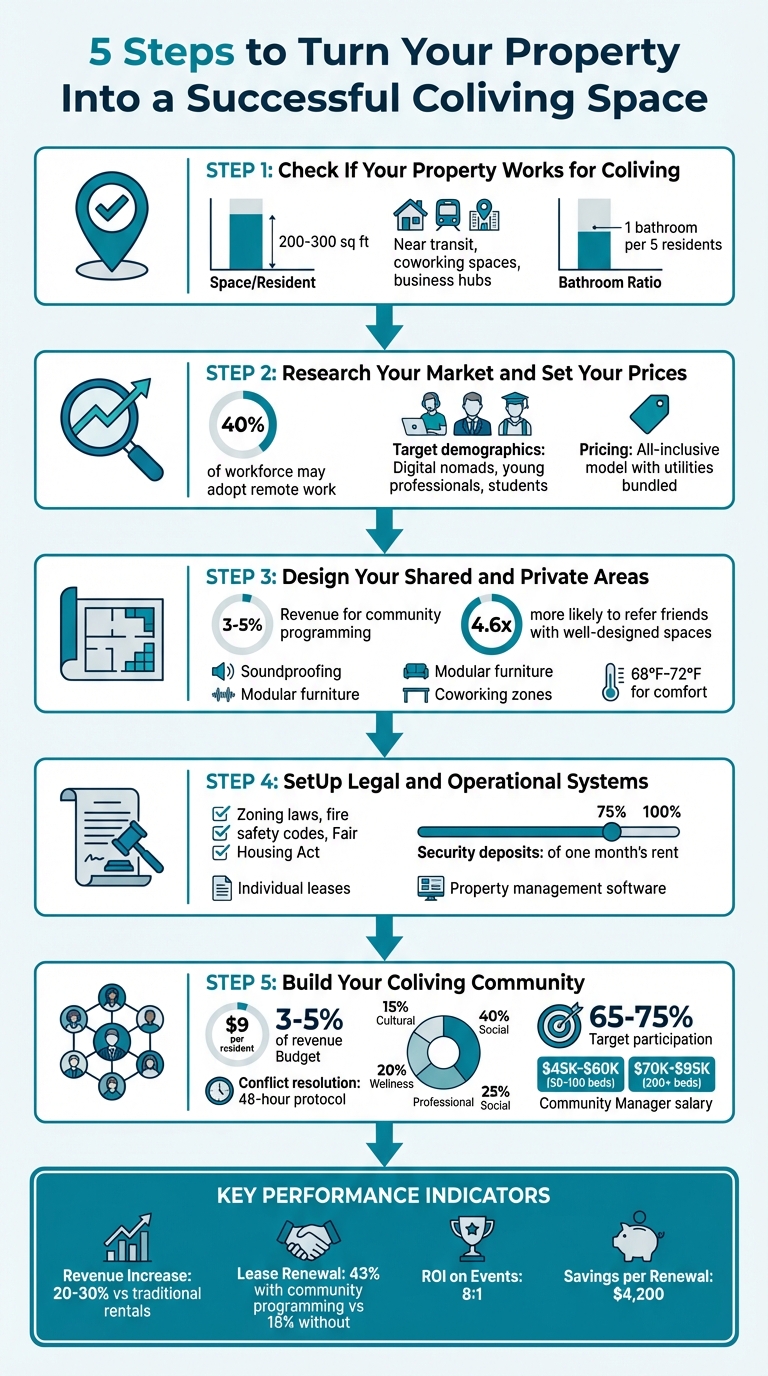
5 Steps to Turn Your Property Into a Successful Coliving Space
Step 1: Check If Your Property Works for Coliving
Before diving into the coliving model, it’s crucial to determine if your property’s location, size, and layout can support a successful shared living experience. Properties that thrive in coliving typically excel in these areas, making them appealing to multiple residents living under one roof.
Evaluate Location and Local Demand
The location of your property plays a huge role in the success of a coliving setup. Ideal spots are close to public transportation, coworking spaces, and urban amenities that attract remote workers and young professionals. Digital nomads often prefer areas with easy access to cultural hotspots or natural attractions, while professionals lean toward locations near business districts.
To validate your location, consider running a short trial stay with your target demographic. This allows you to collect valuable feedback on nearby transit options and amenities - helping you avoid costly missteps. Matt Lesniak, Co-Founder of Conscious Coliving, highlights a frequent challenge:
"A big obstacle to a lot of coliving projects is planning. Expect hesitance from planning authorities, since a lot of people still don't really understand the concept."
If parking is limited, encourage alternatives like biking by offering bicycles or other eco-friendly options.
Once you’ve confirmed the location and gauged demand, it’s time to assess the property’s potential for accommodating shared living.
Determine Space Requirements
The next step is to calculate how much space is needed for a functional and comfortable coliving environment. A general rule of thumb is to allocate 200–300 square feet per resident, combining both private rooms and shared spaces. Giovanni Patania, Principal Architect at WindsorPatania Architects, emphasizes this key principle:
"The golden rule is simple: every tenant needs enough space to live comfortably. Your shared areas - whether it's the kitchen, living room, or bathroom - should be large enough for everyone to use without feeling cramped."
Boutique hotels often convert to coliving spaces with minimal effort, while larger villas, apartments, or office buildings may require more extensive renovations.
When planning the layout, keep these essentials in mind:
- Kitchens and bathrooms should ideally be on the same floor as bedrooms, with at least one bathroom for every five residents.
- Sleeping areas should be positioned away from noisy shared spaces.
- If you’re including coworking zones, ensure they’re physically and acoustically separated to maintain focus and privacy.
Step 2: Research Your Market and Set Your Prices
Study Local Coliving Demand
To build a profitable coliving business, you need to understand who’s looking for housing in your area. Start by identifying properties similar in size, location, and amenities. Pay attention to their occupancy rates, how quickly they rent out, and any seasonal patterns in demand.
Your target demographic will guide decisions about pricing and amenities. For example, digital nomads often prioritize well-equipped workspaces and strong internet connections. Young professionals, on the other hand, might focus on proximity to business hubs and networking opportunities. As Peter Fabor, Founder of Surf Office, explains:
"The type of 'visitor' you actually want to target for your coliving space: remote workers... They need a productive place to work, good internet and are happy to pay for the comfort."
Meanwhile, students tend to be more budget-conscious, placing higher value on social activities than on high-end finishes.
To validate your assumptions, keep an eye on trends among mobile professionals and childless households - key groups driving coliving demand. With businesses predicting that nearly 40% of their workforce may adopt remote work models in the future, the need for flexible housing continues to rise. Don’t forget to monitor local development projects, as new construction or gentrification could either open up opportunities or lead to market saturation.
Create Your Pricing Model
Once you have a solid understanding of local demand and your ideal tenant profile, it’s time to nail down a pricing strategy that ensures profitability.
Start with a Rental Market Analysis. Compare similar properties and assess local demand. Factor in all your costs - mortgage payments, utilities, Wi-Fi, cleaning, and maintenance - and divide them among the number of residents to establish your baseline rate.
From there, choose a pricing structure that aligns with your market. Options include tiered pricing for private versus shared rooms, subscription models to ensure steady cash flow, or dynamic pricing during peak periods. For longer stays (over 30 days), consider offering discounts to minimize turnover costs. Since coliving spaces share common expenses among tenants, you can keep rates competitive while still maintaining healthy margins.
Step 3: Design Your Shared and Private Areas
Plan Your Layout for Shared and Private Spaces
The way you design your coliving space has a huge impact on how residents interact and feel at home. You want private bedrooms that truly provide solitude, paired with communal areas that naturally encourage connection.
Instead of one oversized common area, arrange smaller groups of living units around shared kitchens or lounges. This setup fosters closer relationships and avoids overwhelming residents who prefer a more intimate environment.
Create pathways that naturally guide residents through shared spaces like the kitchen or a central courtyard. These routes encourage casual, unforced interactions. Add small, informal meeting spots like alcoves or hallway seating for quick chats or quiet moments.
Acoustic zoning is another key consideration. Use sound-absorbing materials such as rugs, curtains, and upholstered furniture to keep noise levels balanced across private and communal spaces. Place lively social areas away from quiet zones meant for work or rest. To enhance privacy, invest in soundproof bedroom walls and doors. And make sure shared spaces are accessible around the clock to accommodate residents working across time zones.
| Feature | Standard Residential Layout | Coliving Layout |
|---|---|---|
| Kitchen | Functional, often isolated | Social hub with multiple cooking stations |
| Living Room | Private family space | Multifunctional lounge with modular furniture |
| Bedrooms | Standard walls/doors | Soundproofed with built-in storage |
| Work Area | Often a desk in a bedroom | Dedicated coworking zones with ergonomic seating |
| Pathways | Direct to exit/entry | Guided through shared spaces to promote interaction |
Once the layout is ready, the next step is to choose furniture and amenities that enhance both comfort and community.
Select Furniture and Amenities
With the layout in place, focus on furnishing each space to balance comfort and community engagement. The quality of furniture and amenities plays a huge role in resident satisfaction and retention.
For private rooms, prioritize features that support privacy and functionality. Use soundproofing, built-in closets, and under-bed storage to maximize space. Each room should include a cozy bed, a desk with an ergonomic chair, and proper lighting to create a peaceful retreat where residents can relax or work uninterrupted.
In communal areas, design spaces that bring people together. A large kitchen island or peninsula is perfect for social cooking. Equip the kitchen with high-capacity appliances and multiple cooking stations to avoid congestion during busy hours. Use modular furniture - such as movable chairs, ottomans, and floor cushions - so residents can easily rearrange the space for activities like movie nights or yoga sessions.
Modern amenities like high-speed Wi-Fi, smart locks for keyless entry, and programmable thermostats are essential. Keep shared spaces comfortable, maintaining temperatures between 68°F and 72°F, with kitchens slightly cooler to offset appliance heat. Layer lighting with options like floor lamps, table lamps, or string lights to create a welcoming atmosphere. For coworking zones, include ergonomic furniture and private phone booths, and separate these areas visually and acoustically from social lounges.
Did you know that residents in well-designed, well-equipped spaces are 4.6 times more likely to refer friends compared to those in less engaging environments? To maintain this appeal, allocate 3-5% of your revenue for community programming and upkeep of shared spaces. This investment keeps your coliving environment functional, inviting, and vibrant.
Step 4: Set Up Legal and Operational Systems
Learn the Legal Requirements
Once your property's design and market strategy are ready, it's time to tackle the legal aspects of your coliving venture. Before welcoming residents, you need to understand the legal framework that governs shared housing in your area. Start by checking local zoning regulations and securing any necessary permits, as coliving spaces are often categorized differently from traditional housing.
"Zoning laws have become challenging for property owners planning to turn their properties into coliving arrangements. Traditional zoning laws limit the use of a property as a coliving space, as residential zoning can restrict the type of housing that can be built in an area." - David Haskins, CEO, WrongfulDeathLawyer.com
Compliance with fire safety codes is non-negotiable. Install smoke detectors, fire extinguishers, and, if your property is large, sprinkler systems. Emergency exits must be clearly marked and accessible.
You'll also need to follow the Fair Housing Act, which prohibits discrimination based on factors like race, religion, sex, or disability. Use consistent screening criteria for all applicants, and be prepared to offer reasonable accommodations when necessary. Depending on where your property is located, you might also need business licenses, occupancy permits, or a "change of use" approval if you're transitioning the property from traditional residential use to shared housing.
Organize Your Rental Operations
Once you're legally compliant, focus on streamlining your day-to-day operations. Offering individual leases is a smart move - it provides residents with flexibility while ensuring a steady income stream for you and reducing overall risk.
Set security deposits at 75% to 100% of one month's rent, which is standard in the industry. Simplify billing by bundling utilities, high-speed internet, and cleaning services into a single monthly fee. Property management software can make your life easier by automating rent collection and keeping track of payments.
Screen potential residents thoroughly by running credit, background, and employment checks. Beyond that, consider lifestyle compatibility to create a harmonious shared living environment. Listing your property on platforms like Coliving.com can help you reach the right audience - people who already understand and appreciate the coliving concept. To make life easier for everyone, use digital resident portals for things like maintenance requests, lease access, and communication.
Step 5: Build Your Coliving Community
Creating a legally compliant, thoughtfully designed property is just the beginning. What truly sets a coliving space apart is the sense of community it fosters. Once your property is ready and your marketing efforts are in motion, the next step is to focus on building a strong, engaged community. This involves nurturing relationships among residents and ensuring smooth day-to-day operations.
Encourage Social Connections
Set aside 3–5% of your revenue for community events. Even a small investment - about $9 per resident - can make a big impact. For example, in 2024, a 180-resident property in Austin, TX, hosted 22 events each month with a modest budget of $1,595, leading to a 68% participation rate. To keep things engaging, balance your event programming with a mix of activities: 40% social events, 25% professional development, 20% wellness activities, and 15% cultural experiences. This variety ensures there's something for everyone.
"You're not in the real estate business. You're in the people business that happens to involve real estate. The moment you understand that distinction, everything changes." - Maria Gonzalez, VP of Community Operations, Common Living
Make new residents feel welcome by introducing a buddy system, pairing them with long-term residents who can help ease their transition. Establish weekly rituals like Thursday community dinners or Sunday potluck brunches to create regular opportunities for connection. For larger properties with 100 or more residents, consider hiring a full-time Community Manager. Interestingly, Common Living discovered that 60% of their top-performing community managers were former teachers, thanks to their expertise in handling group dynamics and resolving conflicts. Salaries for these roles in 2024 range from $45,000–$60,000 for properties with 50–100 beds, and $70,000–$95,000 for properties with 200+ beds.
Manage Your Property Effectively
Operational efficiency is the backbone of any thriving coliving community. It ensures that residents can focus on building connections without being bogged down by everyday frustrations. For instance, 45% of coliving conflicts arise from noise complaints, while 25% stem from cleanliness issues. Address these proactively by setting clear house rules, such as quiet hours from 10 PM to 8 AM and a guest limit of 2–3 nights per month.
Implement a 48-hour conflict resolution protocol to handle disputes effectively. This means acknowledging complaints within 2 hours, investigating within 12 hours, holding mediation within 24 hours, and presenting a resolution plan by the 48-hour mark. Follow up a week later to ensure the issue is resolved. This structured approach helps prevent minor problems from escalating into major disputes.
Keep shared spaces organized to reduce friction among residents. Use strategies like color-coded utensils, labeled cabinets and appliances, and designated personal storage areas. Communication is key - install bulletin boards for announcements and use shared digital calendars for tracking events and maintenance schedules. Regular cleaning services for common areas are a must, not a luxury, to maintain resident satisfaction.
Aim for an event participation rate of 65–75% and strive for a Net Promoter Score between 50–70 to measure the health of your community. These numbers will help you understand whether residents are thriving in the space or merely tolerating it. A well-managed property paired with a vibrant community can make all the difference in creating a successful coliving experience.
Conclusion
Achieving success in coliving means finding the right mix of market research, smart design, and strong community engagement. Start by gauging demand in your area and ensuring your property layout supports a balance of private and shared spaces.
The financial advantages of coliving are hard to ignore. Properties can earn 20-30% more revenue compared to traditional rentals. Plus, fostering a strong sense of community pays off - programming efforts lead to a 43% lease renewal rate, far surpassing the 18% rate seen without such initiatives. This difference can save around $4,200 per resident renewal in marketing and turnover costs.
Thoughtful design is also key. Keep social and quiet areas separate to reduce friction, and invest in community events, which typically deliver an impressive 8:1 ROI through better retention and referrals. Simplify operations with all-inclusive pricing and automated systems for tasks like utility management. Hiring a community manager with a background in hospitality or education can make a huge difference, as engaged residents are more likely to refer others, turning your community into a powerful marketing tool.
These strategies highlight the importance of a well-rounded approach. Efficient operations and a vibrant community are the backbone of a successful coliving space. High participation in events and positive resident experiences are clear signs you're on the right track. Be proactive in addressing problems and use feedback to refine your efforts.
Ultimately, coliving success goes beyond managing properties - it's about creating a people-first experience. By fostering authentic connections among residents and maintaining top-notch operations, you can build a thriving community. With the US housing market currently short 4.7 million homes, coliving not only presents a profitable business model but also offers a meaningful way to address the affordable housing shortage. Align your space, pricing, and community focus, and you'll create a model that's both financially rewarding and deeply impactful.
FAQs
What legal steps should I take to convert my property into a coliving space?
To turn your property into a coliving space in the United States, the first step is to confirm that local zoning laws allow shared housing. Many cities have zoning rules that restrict the number of unrelated people living together or dictate specific residential uses. You might need to apply for a zoning variance, a special use permit, or even reclassify your property as a multi-family unit or rooming house to meet these regulations.
Once the zoning is sorted, you'll need to secure key permits, such as a business license, landlord license, certificate of occupancy, and fire-safety approvals. These permits ensure your property complies with fire safety standards - like having smoke detectors, sprinkler systems, and emergency exits - and stays within occupancy limits. It’s also crucial to verify that the property meets building codes, including accessibility requirements under the Americans with Disabilities Act (ADA).
Since regulations differ from city to city, consulting a local attorney or property-management expert is a smart move. They can guide you through the permitting process, help draft legally sound lease agreements, and ensure your coliving space complies with all legal and safety requirements.
What are the best ways to market my coliving space and attract the right tenants?
To market your coliving space effectively, start by crafting a distinct and relatable brand identity that mirrors the lifestyle and values of your ideal tenants. Think about what sets your space apart - whether it's a strong sense of community, eco-conscious design, or sleek, modern amenities - and use that to tell a story that resonates emotionally with potential residents. Share this story consistently across your website, social media platforms, and property listings to create a memorable and cohesive presence.
Once your brand is in place, focus on reaching the right audience. Conduct market research to pinpoint who’s most likely to embrace coliving in your area - this might include young professionals, remote workers, or students. Use high-quality images to showcase your property, feature testimonials from current residents, and highlight the perks of shared living, such as opportunities to network and attend social events. Offering virtual tours and a simple online application process can also make it easier for potential tenants to envision themselves in your space and take the next step.
Building trust and fostering engagement is equally important. Encourage your current residents to leave honest reviews or participate in referral programs. Stay connected with potential tenants through newsletters or online groups, keeping them informed and engaged. By maintaining open communication and creating authentic interactions, you’ll not only strengthen your community but also attract new tenants through positive word-of-mouth.
How can I build a strong sense of community in my coliving space?
Creating a welcoming and connected community in your coliving space starts with intentional design and opportunities for meaningful interaction. Prioritize shared spaces like open kitchens, inviting lounges, and flexible multipurpose areas that naturally spark casual conversations while still respecting the need for privacy. Regularly hosting events - think potlucks, game nights, or workshops - can bring residents together and create lasting connections. You can also encourage residents to form their own interest-based groups, like fitness clubs or art circles, to deepen those bonds.
To keep everyone engaged, set up clear communication channels, such as a group chat or a regular newsletter, to share updates and events. A warm onboarding process, complete with a welcome tour or event, helps new residents settle in and feel part of the community from day one. Consider assigning a community manager or ambassador to address feedback, handle conflicts, and promote activities. By actively listening to residents and incorporating their suggestions into events or house policies, you can build a sense of loyalty and create a truly connected living experience.